
Final Fantasy VII Remake
Similar Games
- Final Fantasy VII
- Dragon Age: Origins
- Yakuza (Series)
Pros
- Intensely satisfying combat
- Amazing characters
- A fresh retelling of an incredible story
- Untouchably beautiful presentation
Score
Cons
- Ambient banter is too loud
- Intra-party dialogue can be interrupted
- Texture issues
Worth Time & Money?
Yes
Intro
I think it's easy to go into Final Fantasy VII Remake with anticipation of how it will follow the original to the letter. As a massive fan of Final Fantasy VII, this is exactly what I did; however, this is simply the wrong way to approach the game. Remake functions more as a re-imagining akin to 2019's Resident Evil 2 remake rather than the HD remasters we see far more often, or even the recent Demon's Souls remake on PlayStation 5. That isn't to say that the game fails to resemble its source material in the ways that matter; rather, that it is simply unafraid to make alterations where it could and indeed should.
Final Fantasy VII Remake is the perfect melding of many things: anime and reality, real-time and ATB combat, and most impressive of all is its careful treading of the line between the new and the familiar. Remaking a historic landmark the likes of Final Fantasy VII was an incredibly risky venture that was almost sure to fail due to its rocky development and the unfathomable expectations put upon it by the original game's fans. Chances were slim that it would tap into what made the original title so special, on top of the multi-part structure denying its players of the amazing sequences and story beats post-Midgar, so what Square managed to achieve here is nothing short of remarkable.
Nostalgia & Legacy
One of the more understandably controversial topics surrounding Final Fantasy VII Remake is that it seems to be in a big hurry to show all of the original story's greatest hallmark moments, robbing newcomers of the outstanding build-up and anticipation that the original game provided. Fortunately, I think a lot of that concern can be dismissed because so much of what is shown is hazy and unclear-- almost nonsensical for the uninitiated.
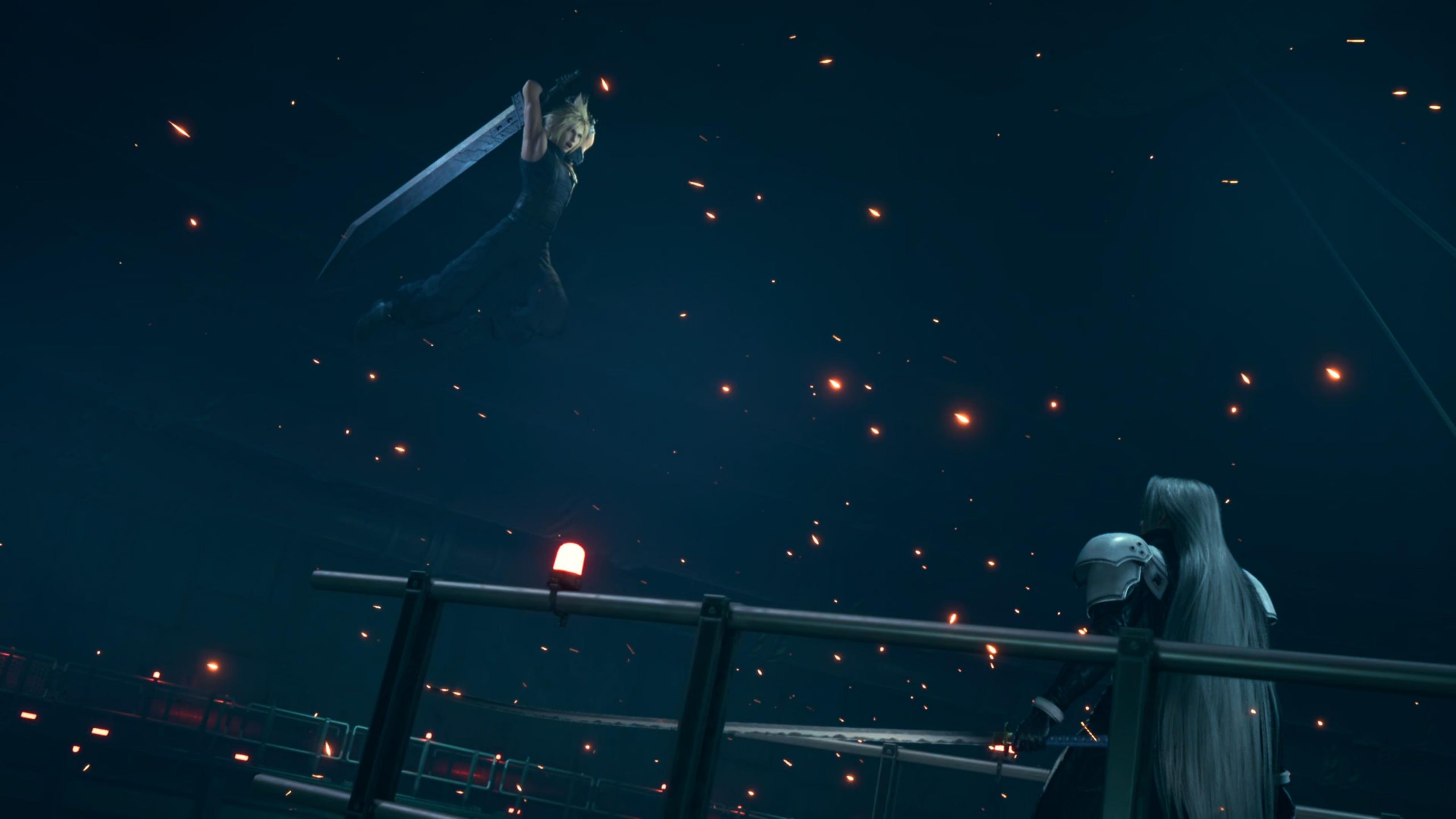
Final Fantasy VII builds up its main villain very slowly, with that game's director citing Jaws as a direct inspiration behind his handling and eventual reveal. The payoff for that version of Sephiroth is outstanding and sends shivers down my spine to this day, standing as one of the finest moments of that entire game. Remake treats Sephiroth quite differently, making frequent appearances to Cloud and the player, seeming both omnipotent and omnipresent. He's the game's Darth Vader with a presence that is equally intense and frightening. Sephiroth showing up not only so often but so early serves as a much-needed setup for the likely clash with him later, and these moments are terrifying and intriguing all at once. Like Cloud, both sides of the audience are knocked down into a state of confusion, asking "what's happening" and "what does this mean?"
As with many others, I too was worried that the game was showing its hand far too early with regard to Sephiroth as I hold his original reveal near and dear to my heart, but throughout the entire experience and especially upon replays and reflection, I think Remake might handle him even better. Sephiroth is the most easily identifiable aspect of the game that makes me feel like I got to experience Final Fantasy VII for the first time again, something I never thought was possible and didn't even know that I wanted.
My favorite story beat in Final Fantasy VII is that of Cloud and the mysteries surrounding him. Remake plays on the expectations of the part of the audience that's aware of this arc, and it's amazing to progress through the game and be delighted by its faithful recreation of Midgar and retelling of Cloud's journey through it and then occasionally see the game intentionally fumble, delving into parts of the story that players shouldn't be aware of until whatever the Remake series' equivalent of disc 3 will be.
Characters
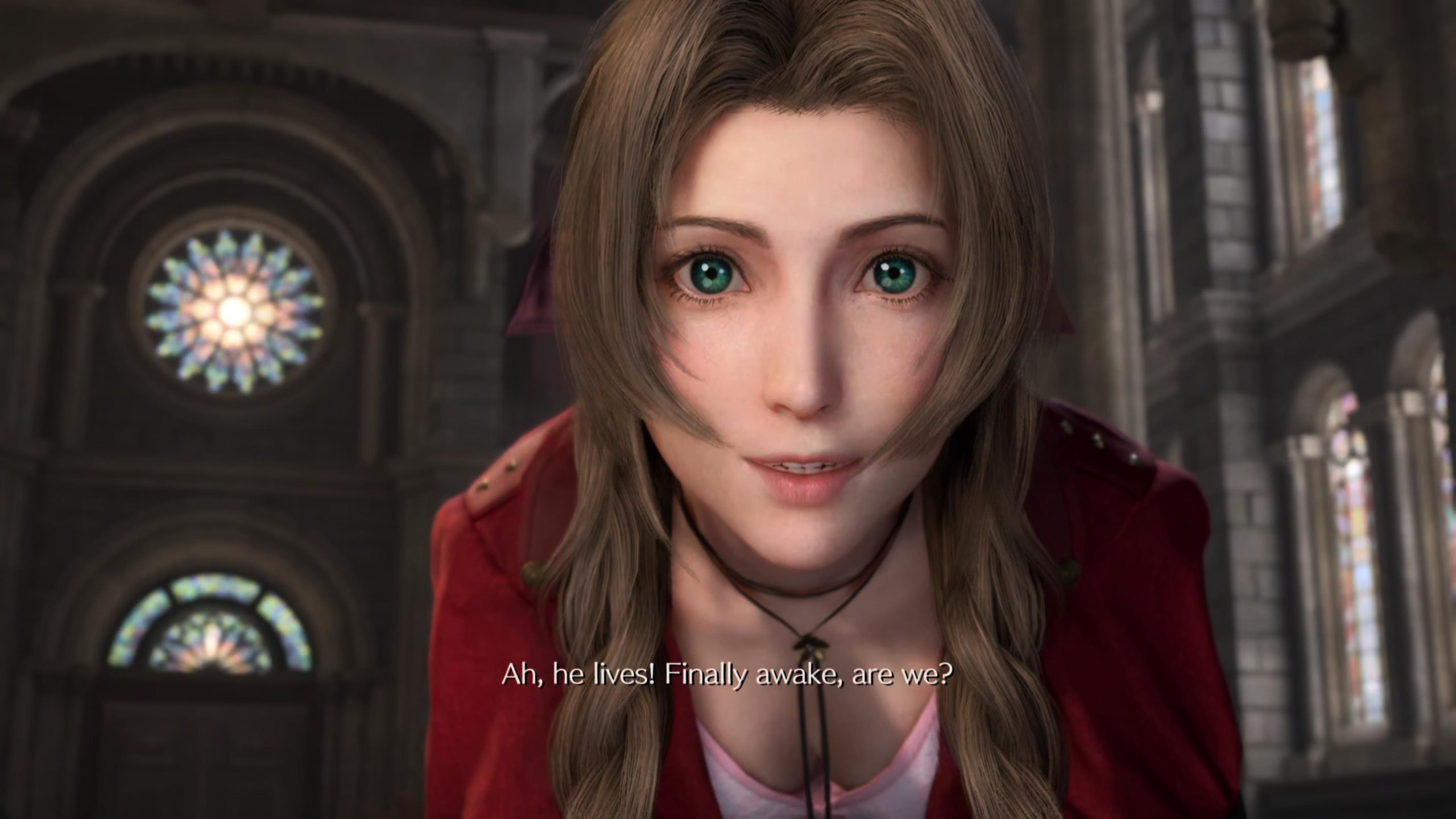
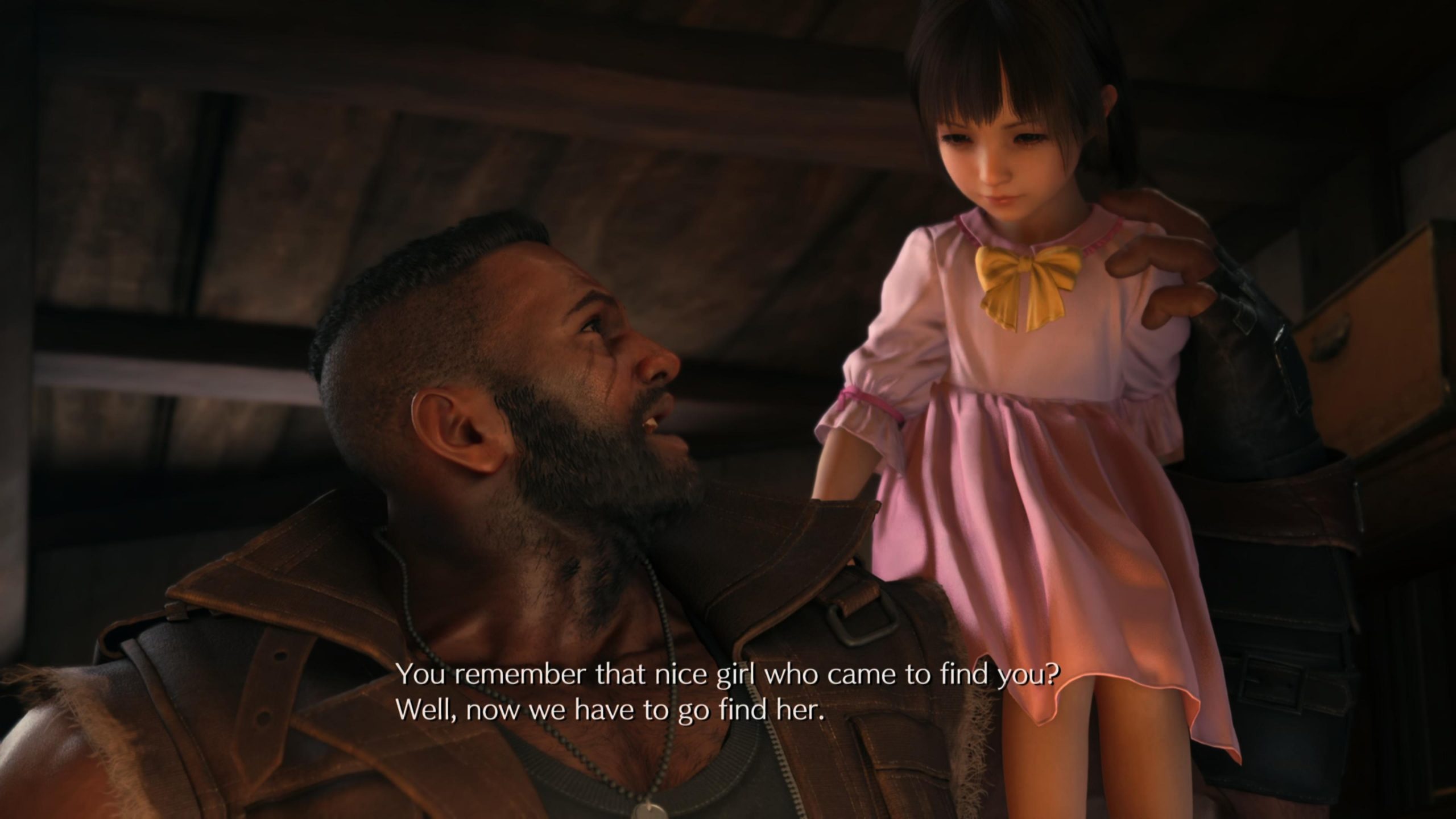
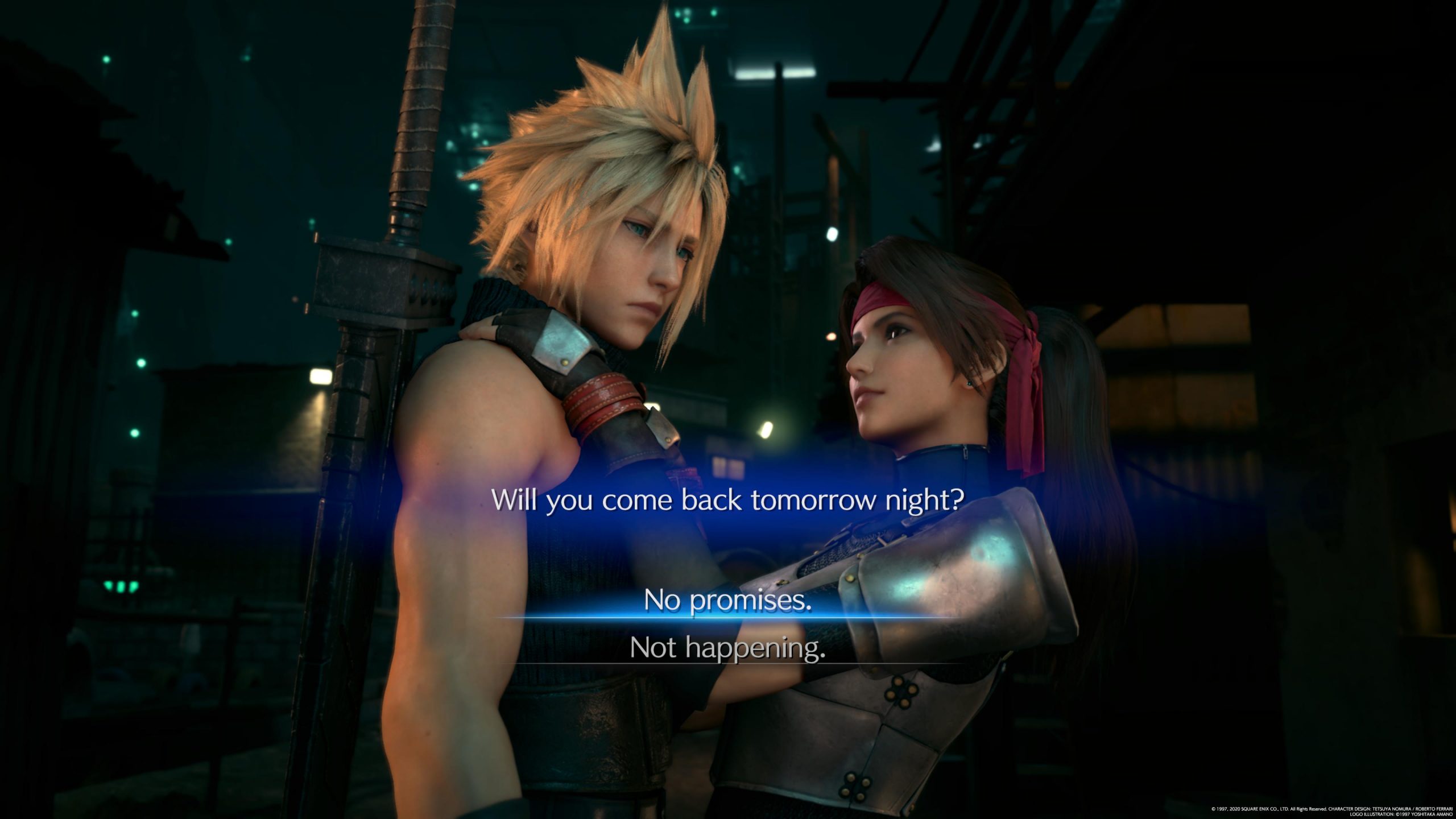
Prior to release, one of the most common fears was how Remake would portray its cast, the major worry being that the characters would be emo-washed much in the way all of the Compilation materials depict. It's clear from the moment the game begins that the development team took this very seriously, faithfully recreating each of them with well-written dialogue, beautiful arcs, and what must have been a painstaking casting process to land such masterful performances.
Barret relishes in his bombastic Mr. T attitude, Jessie's infectious pep is as endearing as it is deliberately eye-rolling, and Cloud's calm and confident demeanor are prime examples of how properly realized the entire cast is, elevating the experience to heights never seen in any Final Fantasy. Dialogue has a witty and humorous punch throughout with moments like Barret singing songs, tales of Tifa telling an admirer where to shove his bouquet of flowers, and a surprisingly cute dorkiness from Cloud when he's called out for not being as cool as he thinks he is. This all lends to a palpable sense that Square finally understands what Final Fantasy VII always was. I can't picture Advent Children's Cloud playing rock-em sock-em robots or rummaging through Tifa's underwear drawer, but Remake's Cloud? Hoo boy.
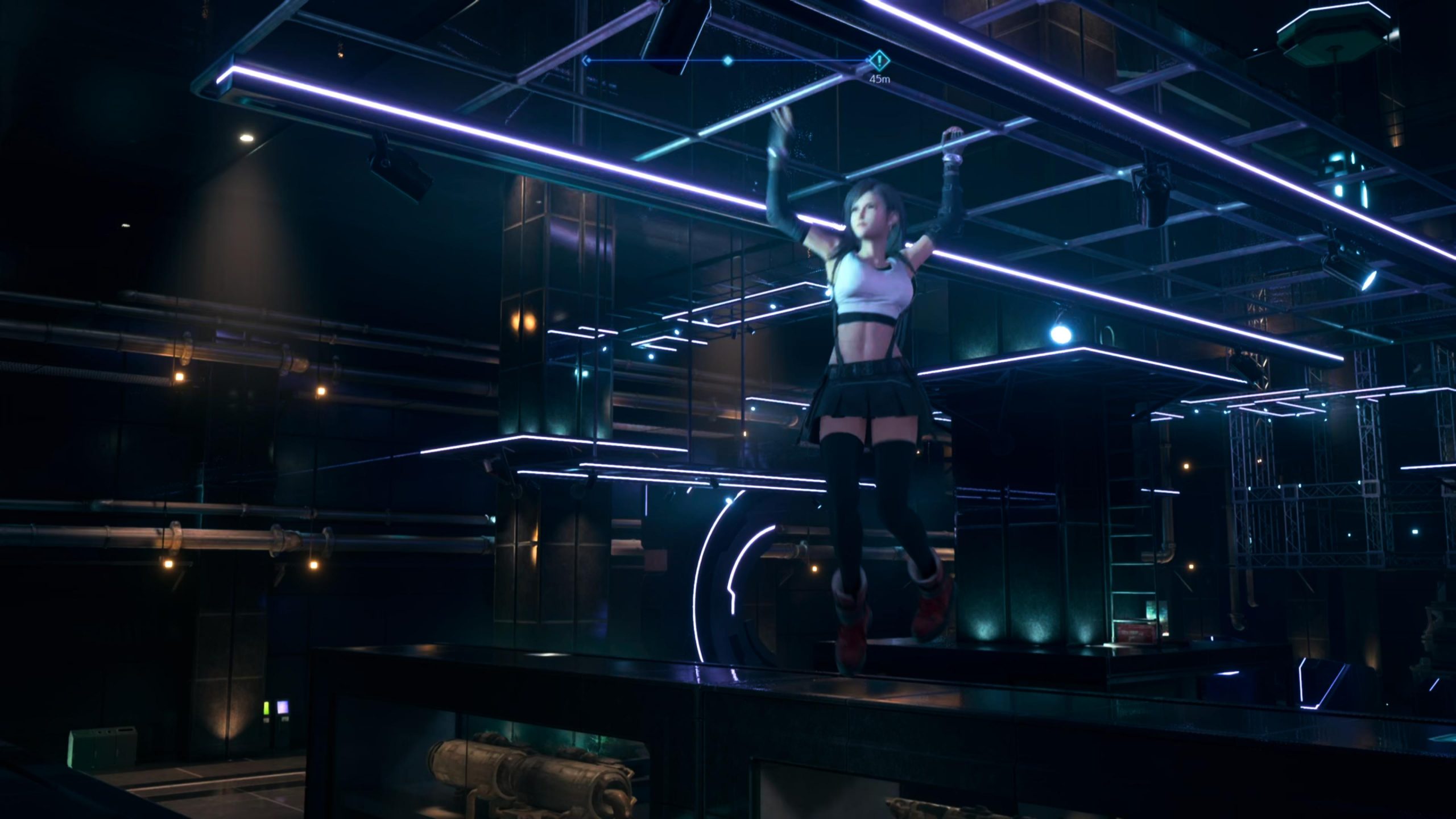
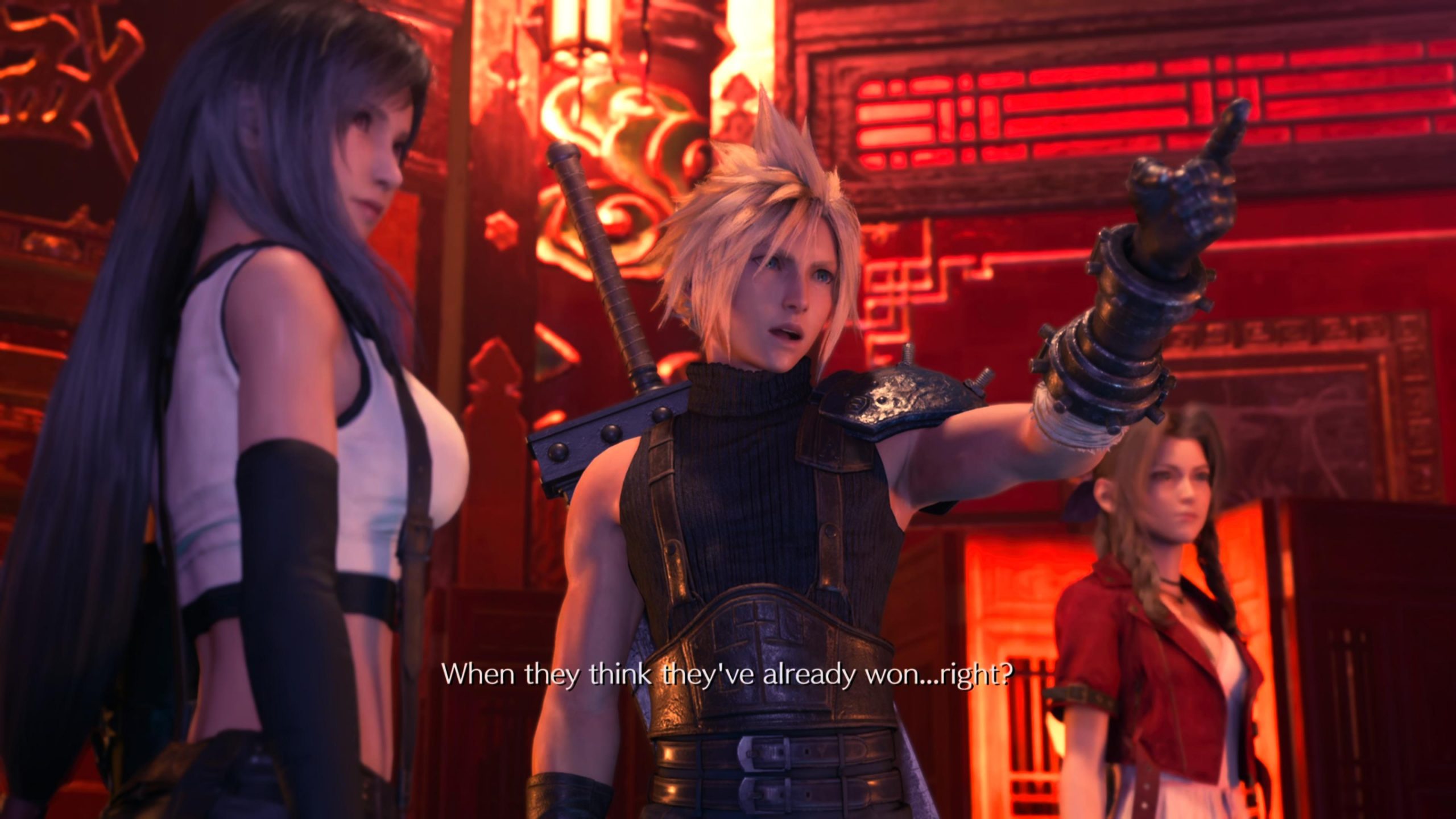
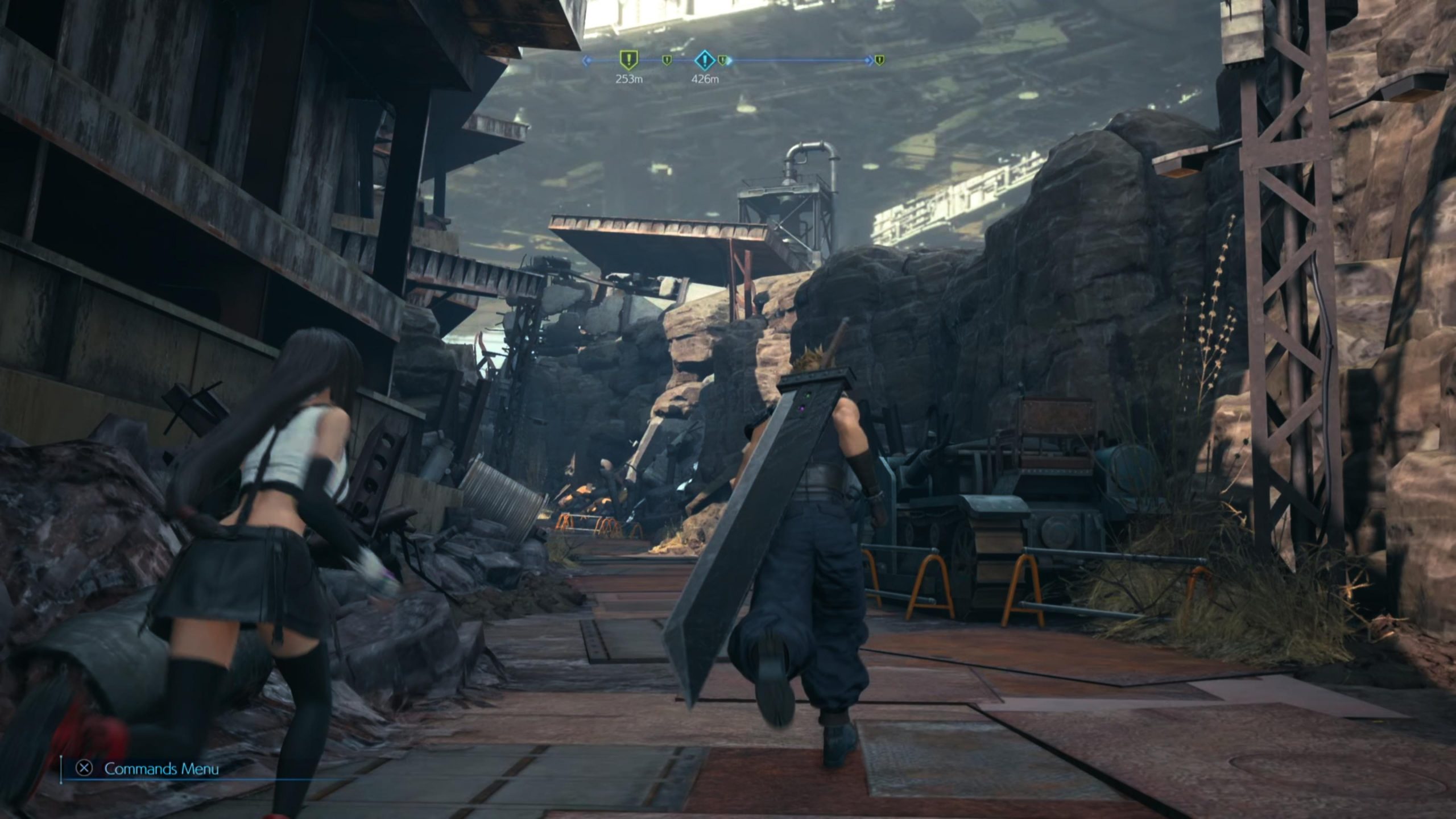
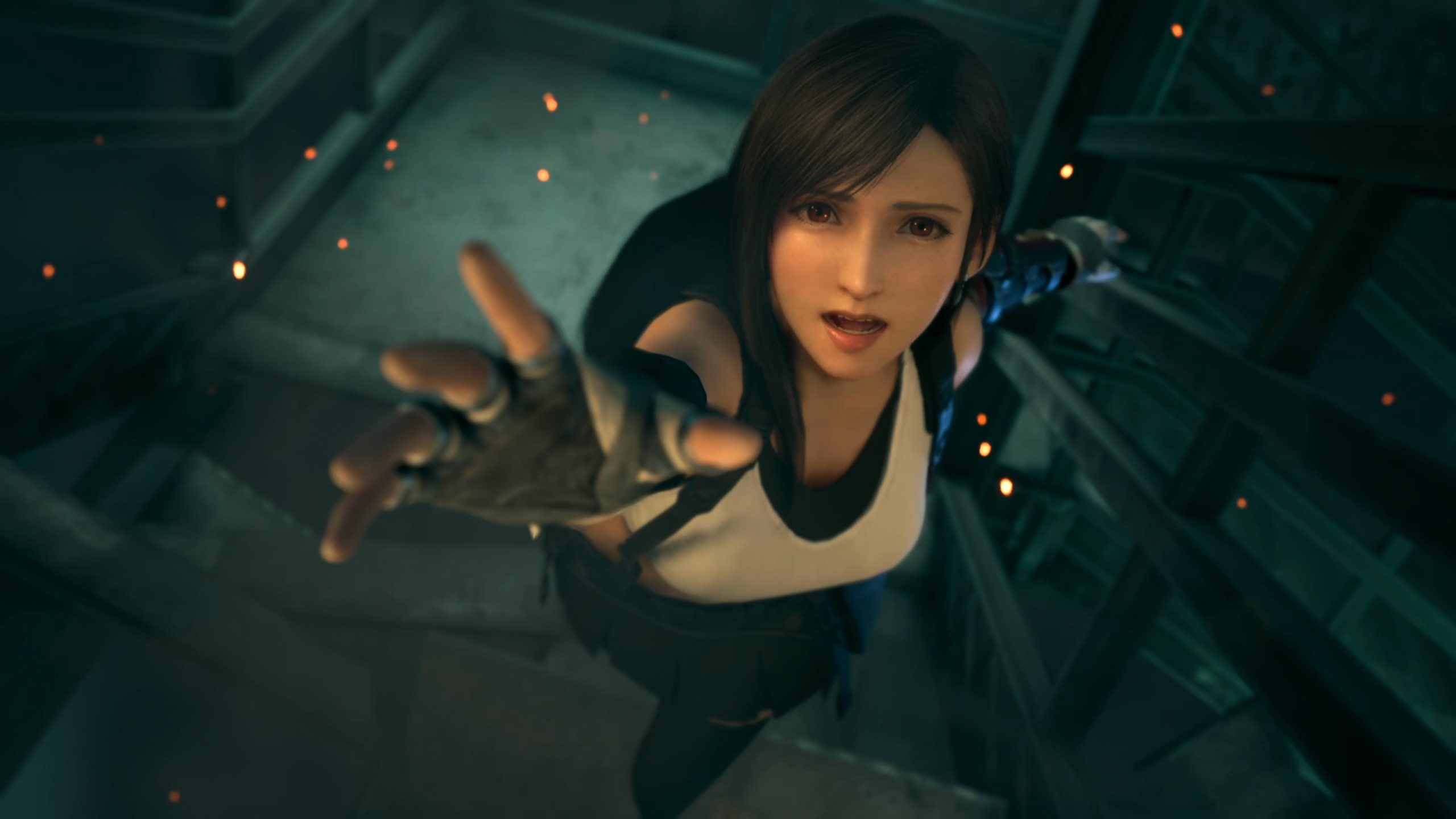
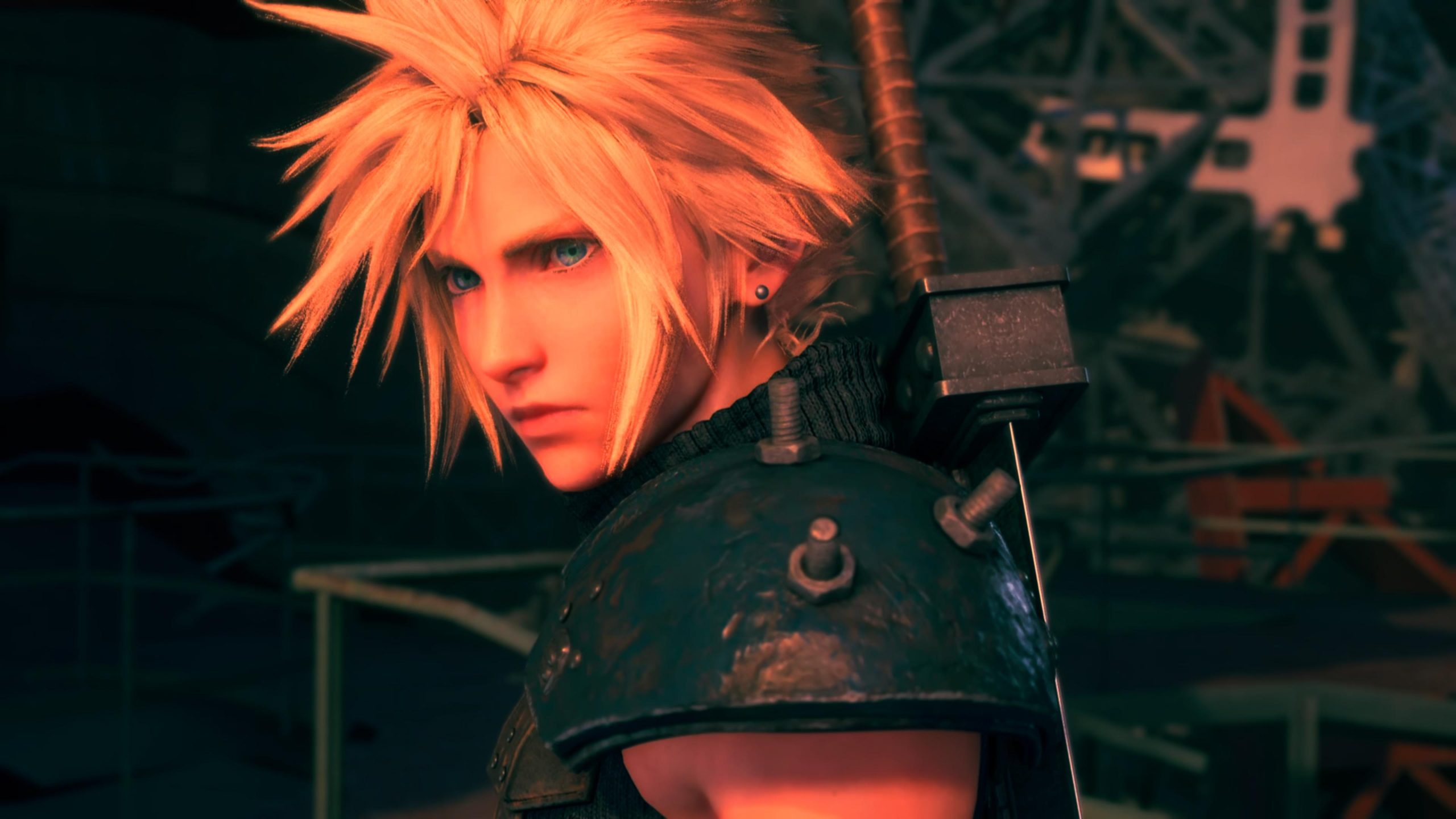
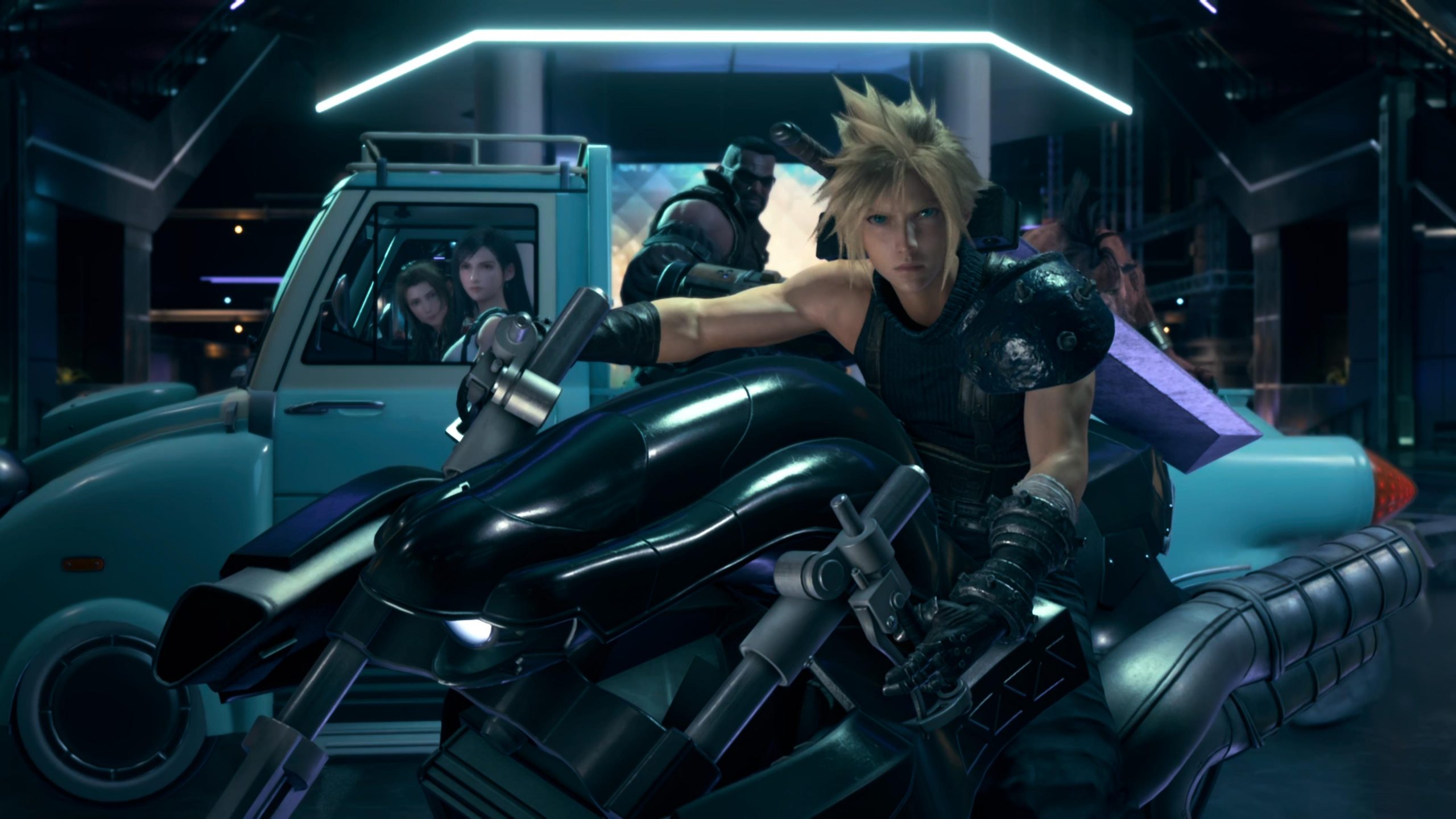
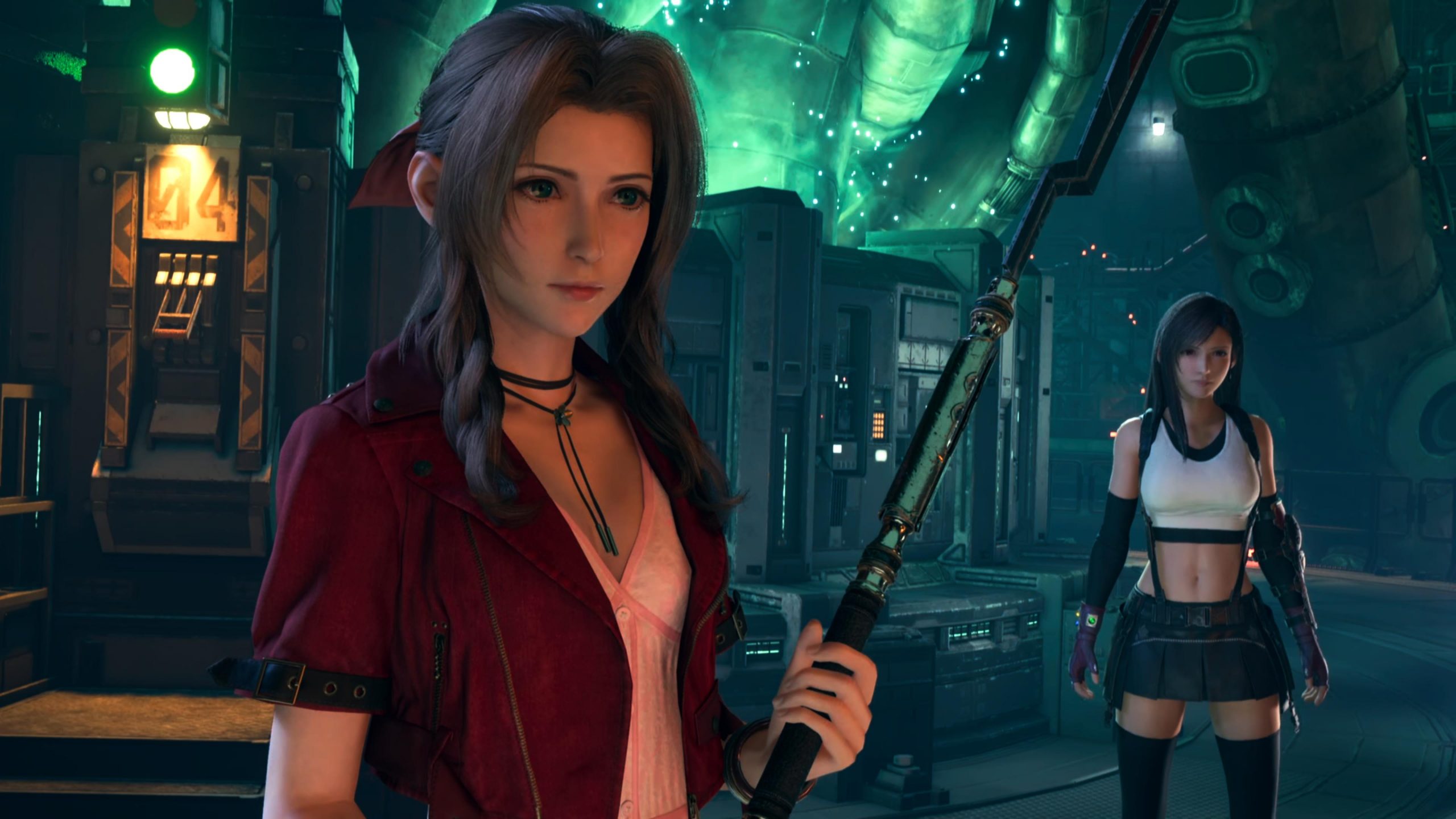
Character designs are honestly perfect, each popping with style and personality and brilliantly representing their low-fi counterparts. The amount of detail is truly staggering, and the visual identity of the game somehow finds this impossible balance between anime and reality. The way hair looks and moves is incredible, facial animations are excellent, fabrics bend and fold realistically-- graphically, everything is just firing on all cylinders.
If you look back to the original trailer that was released for Final Fantasy VII Remake, you'll notice that those voice actors are the very same who performed their roles in Advent Children and other Final Fantasy VII materials. However, around the time that the game was ripped away from CyberConnect 2 brought back in-house, most of the characters were recast with new talent. This initially worried me, but now I firmly believe that this was the right decision, not necessarily because the original actors were bad (though some absolutely were), but because of how incredible the end result is. Though some of the new voices were a bit difficult to cope with, notably Reno and another character I won't spoil, I was able to adjust quickly and thought the rest of the performances were perfect outright. I'll also mention that the anime grunting was a bit tiresome at first, but you get used to it quickly and I personally don't even notice it anymore.
Midgar
Midgar in Final Fantasy VII effectively served as both the introduction and tutorial, lasting between 5 to 9 hours for the standard playthrough. It established Shinra as an antagonistic force, about half of the playable party, and the majority of the core gameplay mechanics before setting the player loose upon the rest of Gaia on the hunt for Sephiroth.
Final Fantasy VII Remake, on the other hand, takes place solely within Midgar, lasting at its briefest three times the length of the original's time within the dieselpunk metropolis. Filling that much time with enough meaningful content would be no simple task, and more difficult still would be how to end the game in a satisfying way since the end of the original Midgar sequence isn't exactly earth-shattering. How, then, this game managed to not only succeed in these feats but to exceed with such mastery completely blows me away. This is a faithful yet new re-imagining of its source material that truly understands every facet of what made Final Fantasy VII truly one-of-a-kind.
There are environmental details that don't load properly with low-res textures and some blocky geometry, but they're rare enough to not be too distracting and could get patched in the future. What helps quell these texture problems is the outstanding lighting that punches your retinas with moody, atmospheric, and visually arresting visuals that make the moment-to-moment jaw-dropping.
Story
Final Fantasy VII Remake is the story of an eco-terrorist group fighting to preserve what's left of their dying world. It's a timeless and infinitely relevant concept that's easy to become invested in with an endearing cast of heroes and a despicable lineup of villains. Throughout the game, a much deeper story begins to unfold, permeating the experience with mystery.
Being an RPG, and especially being a Final Fantasy, story and cinematics are a massive, inescapable part of the experience. From lengthy cutscenes to extended walking segments, you'll be spending a lot of time watching and listening to this game. That can be a scary and intimidating prospect for some; and rightly so when considering the pedigree of recent titles in the franchise having frequent, cringy, terribly-paced cutscenes. What sets Remake apart is its beautiful cinematography, superb acting, and a musical score that carries and punctuates each scene as well as the moment-to-moment gameplay with dynamic transitions that lend a sense of choreography. Scenes transition into and out of gameplay smoothly and marvelously, and so many shots of the world and characters are truly striking.
One of the only issues I have with the story is that dialogue can be cut off by events and combat and then isn't resumed once the party begins chatting again. This means you'll miss out on some genuinely great banter unless you specifically wait for the dialogue to finish before attempting to progress.
Combat
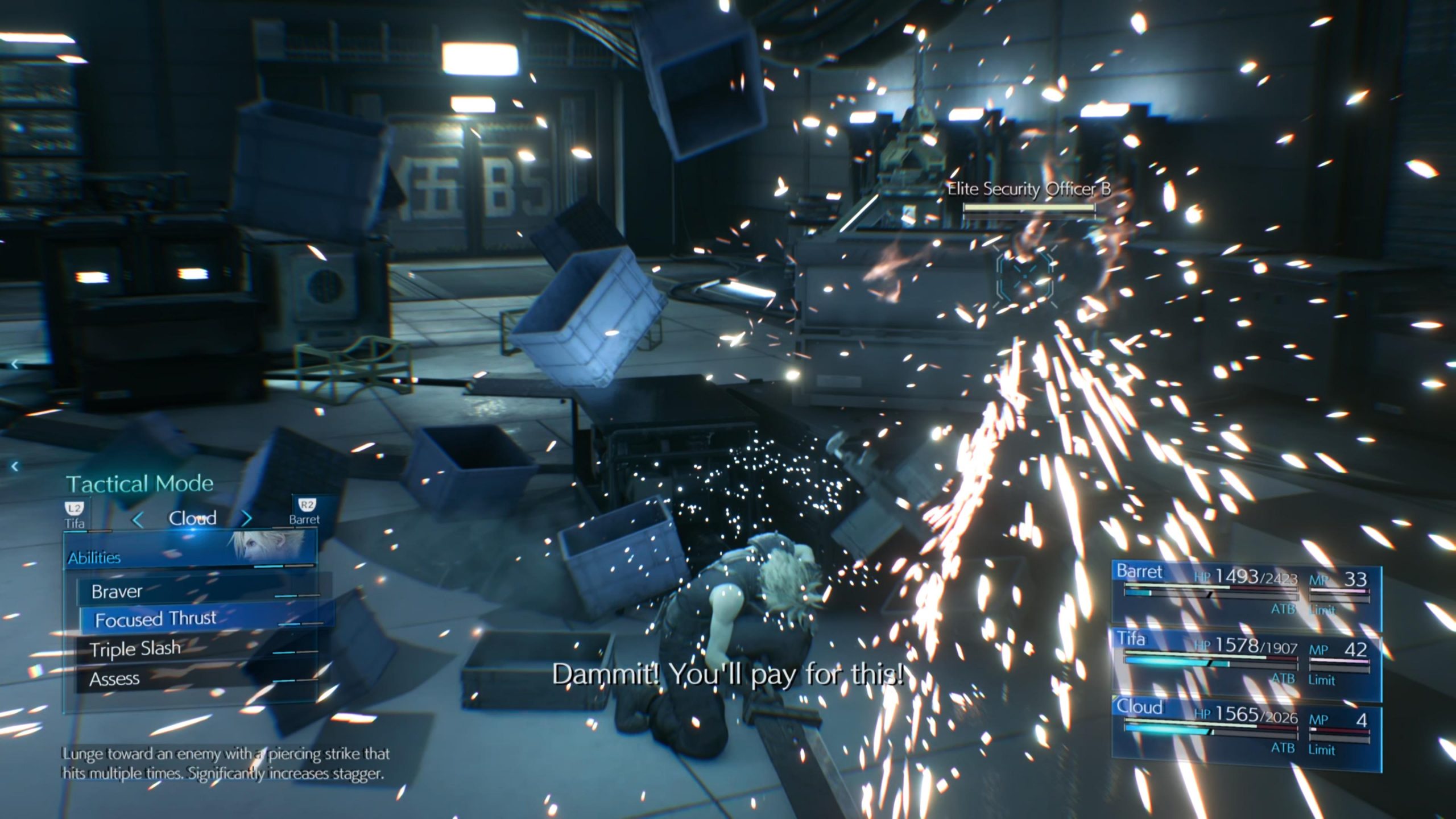
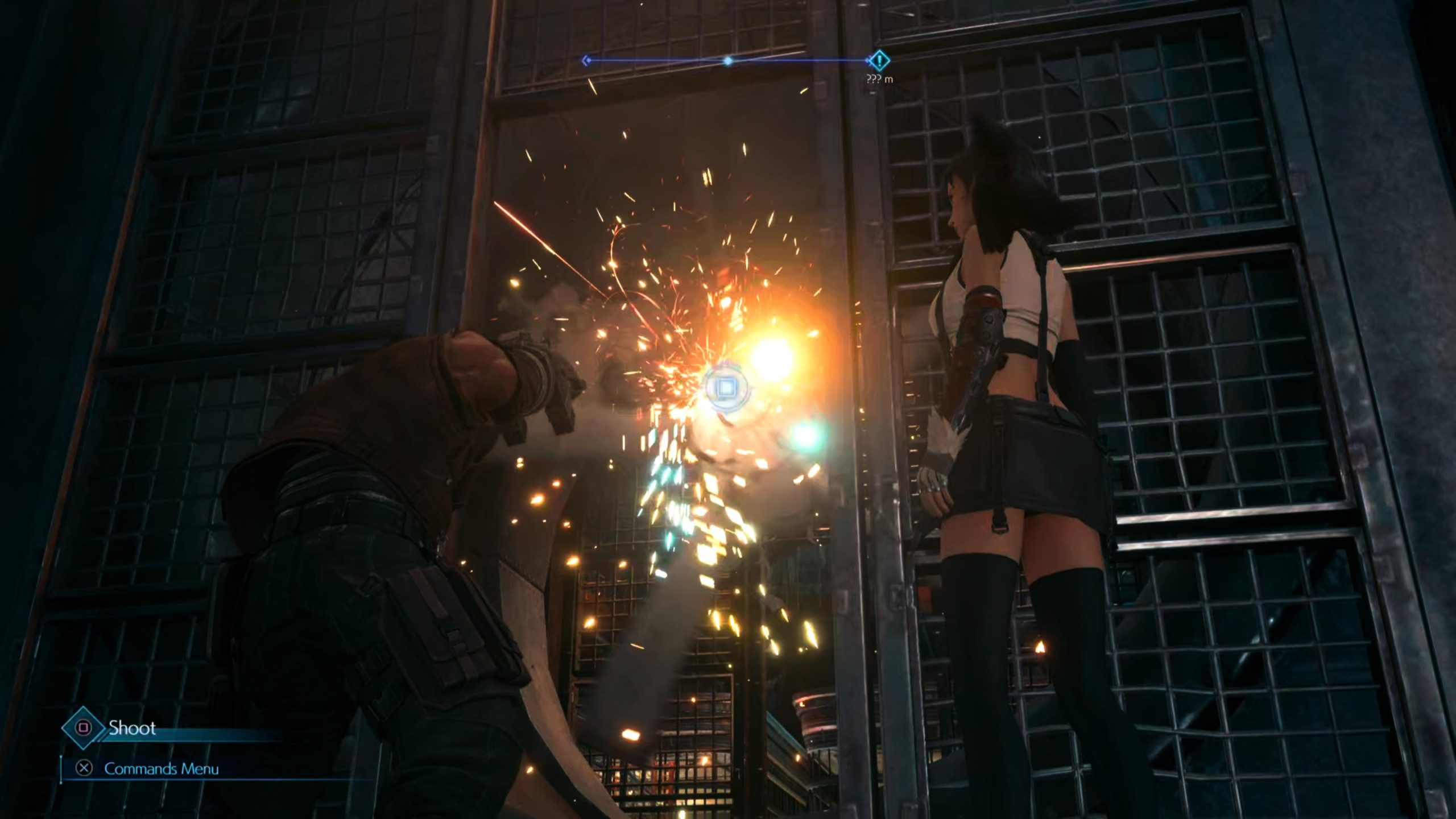
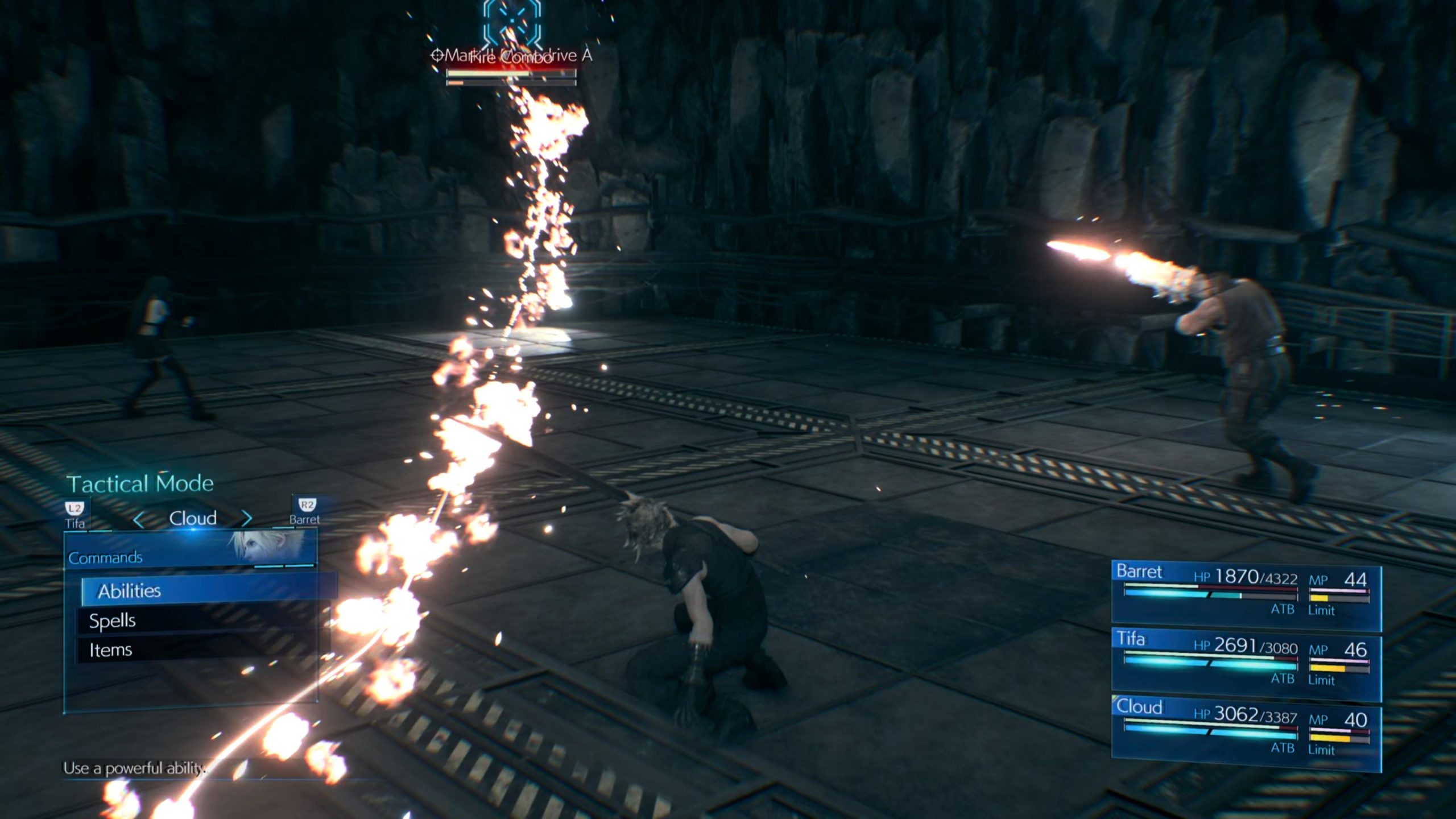
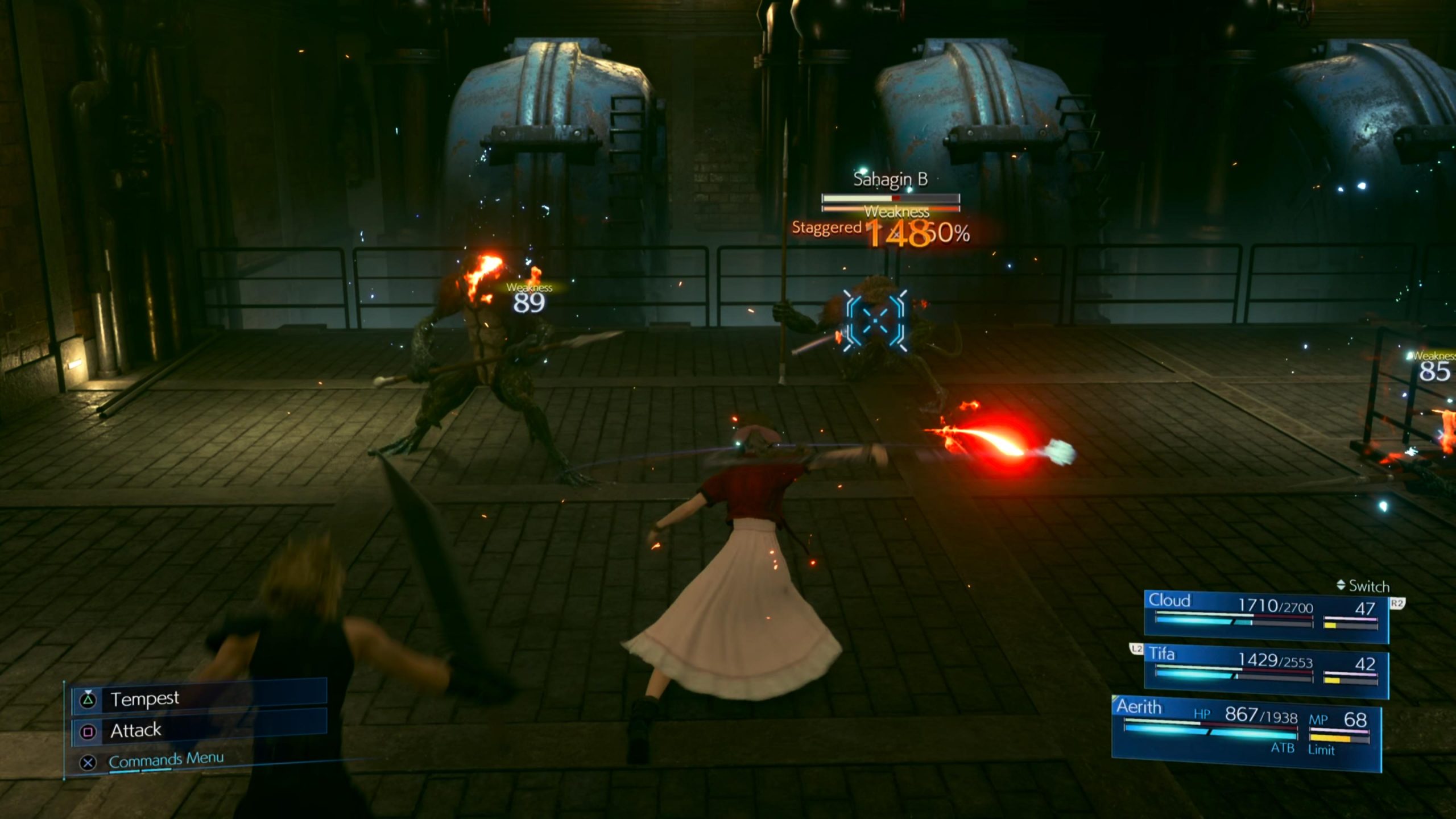
Combat strikes an elegant balance between action and tactics. The heat of the moment gameplay is a lot of mashing, dodging, and observing, but with full freedom to act on weaknesses through commands. It's fast, kinetic, and engaging, yet despite this speed and focus on action, I find that encounters require perhaps even more strategy and consideration than that of the original game. Using the right abilities at the right time and even from the right direction adds so much nuance that didn't exist before. To me, it's the perfect marriage between real-time and turn-based combat, never leaning too far in either direction. It isn't as timing or i-frame oriented as something like Dark Souls, nor is it as slow and abstracted as its source material. Cloud moves where you move him, attacks as you mash square, and the command system offers a brilliant safety net for the less action-inclined.
Selling all of this action is a network of beautiful animations. The detail in each character's movements and postures help to convey their unique designs and personalities. Cloud slouches when sitting still yet walks with the confidence of a professional SOLDIER, and his attacks are sharp, swift, and explosive. Tifa's springier movement and peppy idle stances illustrate her allure and charisma while feeling more planted to her position in a fight, showing that she'd rather hold her ground than dance around. Barret makes slow, steady, precise movements befitting of a hulking marksman.
ATB makes a creative return as a resource for more special and powerful actions. Its bars build up over the course of battle and can be generated a bit faster by guarding and attacking. Companion ATB bars fill up much slower than the active character's which encourages the player to regularly swap between them, which often leads to combat maintaining this intoxicating rhythm of swapping to the right character at the right time in order to most efficiently deal with each circumstance. You might have Barret use his lifesaver ability to mitigate damage for his allies, then swap to Aerith to cast regen on him and effectively cancel out the extra damage he'll take, then swap to Cloud to cast a magnified barrier on everyone to dampen damage even further, and then back to Barret to execute the next part of this elaborate dance which crescendos with staggering the enemy and putting them down for good. For as fast-paced as combat feels in the heat of battle, I find it surprisingly easy to see the game's turn-based roots when you take a step back and view combat from this angle.
Materia & Upgrades
Materia makes a faithful return, working almost exactly as it did back in 1997 though smaller in number. These colorful orbs house the abilities, skills, and magic that the player finds within the Command menu during battle.
While attacking, blocking, and dodging have dedicated buttons, all other actions are accessed via the Command menu much like in Kingdom Hearts. Doing so puts the action into slow-motion, allowing the player to sift through their skills and items in style and free from the stresses of time. These commands can only be performed at the cost of ATB bars, more being required depending on the command. Using a potion requires only one ATB bar while more powerful abilities like Pray require two. On top of ATB, magic also costs MP which deepens the conversation of what to use and when in every situation. The need to heal in a fight is no longer just a matter of having enough potions or MP, but now requires the temporary sacrifice of an offensive ability.
You will find no standard class system in Final Fantasy VII or its remake, but the characters fill those roles with dedicated abilities and varying stats. Armor and accessories can be shared across all party members, but weapons are unique to their character. Only Cloud can wield swords, Tifa with gloves, etc. Their weapons help to define each member's role in battle, as each weapon has its own upgrade tree that provides new abilities and enhances the characters' traits to skew their use toward a specific playstyle, adding depth to fights with a slew of possibilities for tactics and strategies.
Music
Final Fantasy VII Remake's soundtrack was composed by Masashi Hamauzu and Mitsuto Suzuki, and holy fuck, oh my god, this music. Their remasters and remixes of Nobuo Uematsu's classic tunes are out of this world, perfectly complimenting the scenery and atmosphere. Songs are given unseen depth and intricacy, sometimes even completely shifting the mood that they originally inspired. I love the entire soundtrack, but some of my favorites are Let the Battles Begin! - Ex-SOLDIER, Mako Reactor 1, Those Chosen by the Planet, Ignition Flame, Under the Rotting Pizza, Collapsed Expressway, Through Suffering, Cultivating Madness, The Calling, J-E-N-O-V-A - Quickening, and One-Winged Angel - Rebirth.
What's more is that the entire score is dynamically choreographed, giving this sensation that the orchestra is scoring your actions live. Songs will intelligently adapt to whether or not you're in battle, changing tempo and even instruments to better suit the situation. Observing the soundtrack dynamically adjust to the story and my actions is mind-blowing, making even the player-driven moments feel as meaningful and theatrical as the hand-crafted cinematic ones. This system revolutionizes the storytelling presentation in a way that more than lives up to the original game and sets what I hope to be a standard for this title's sequels.
Padding
Many claim that the game is artificially lengthened with filler content like walking segments, recycled locations, mediocre sidequests, and moments in the story where progress is either halted or reversed before continuing down the path that resembles the original story. I can understand these perspectives but disagree with the result.
From what I've read, the majority of those levying this complaint about padding tend to simply be frustrated when Remake deviates from the exact course of the original's plot, as if the game is being distracted. I have yet to see newcomers express this critique and I certainly don't share it, so this comes off as less of a genuine flaw and more of a disconnect in expectations. To put this into perspective, think back to Cloud's retelling of the Nibelheim incident in Final Fantasy VII, where near the end of the story, a bridge collapses and halts the characters' progress, lengthening the time it took to reach their destination.
Or, look to the time when the party is searching for a required mcguffin and directed to a specific location in the world only to be told upon reaching that location that in order to progress, they must first return to where they originally were or else visit another place entirely. Those protesting Remake's "padding" are conveniently overlooking similar tricks used in the original game because, to them, those incidents are simply part of the story. It can be argued that repeating the same issues doesn't exempt them from criticism and I can agree with that, but then I also simply don't have a problem with the additional lore and time we gain through them.
I feel that the sidequests are reasonably in-line with those that populate most RPGs and are sometimes even better. They might only be fetch quests and fights, but these comprise the optional and mandatory content of most games so the complaint is just kind of silly. Should they rub you the wrong way enough, you can skip the sidequests and shave about 10 hours off your playtime. That said, doing so will leave you a bit under-leveled unless you supplement the skipped content with some grinding, but then you're just padding the experience the way that old RPGs, including Final Fantasy VII, did through systems like random encounters. I know that I certainly prefer the world-building and character development gained through side quests more than running in circles for hours to fight the same handful of enemies until my numbers are high enough to progress.
Loading Screens
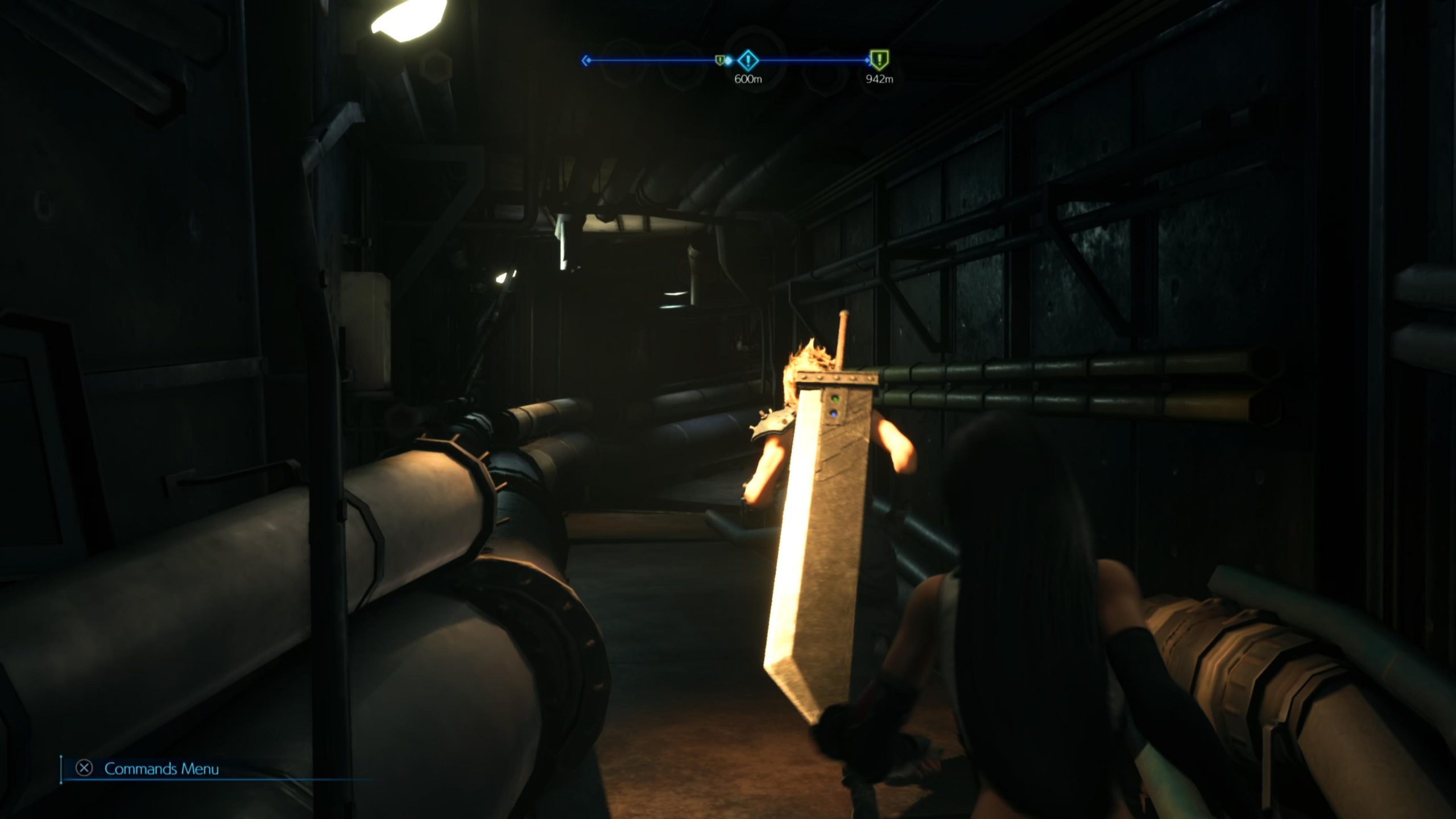
It was difficult to get a sense of how large the city was in Final Fantasy VII, but because most of your journey is uninterrupted in Remake, nearly every step the party takes between points A to B to C help to sell just how massive and interconnected the setting is by experiencing locations that were previously either implied or completely ignored. Many of the world's fine details don't make their way into big cinematic set-piece cutscenes, but rather in the smaller moments such as Cloud and Aerith exploring the rooftops of the Sector 5 slums, or by overhearing conversations between the NPCs while Cloud and Tifa do some mercenary work in Sector 7.
I find it as funny as I do confusing that so many people wanted this remake precisely to discover new, enriched details like these only for the game to come under fire for delivering on this while also having to work through the technical limitations of the current console generation in the form of the infamous gap squeezes and walking segments. From what I can tell, many players simply don't realize that these are disguised loading screens, techniques popularized and refined in the Uncharted series and since used in countless other titles. They're designed to slow the player down so new areas and content can be loaded, something that became progressively more difficult as detail and scale increased while console hardware stagnated. Personally, I've never minded the disguised loading screens. In fact, I'd say they're harmless and actually quite player-friendly, especially knowing that the alternatives would either be to force these story details into expository lore dump cutscenes that ruin the dialogue and pace of the narrative or instead take the Final Fantasy XIII approach of shoving 90% of the world lore into walls of text to sift through in your free time-- completely divorced from the plot. I know that I certainly would far rather hear Tifa's impersonation of President Shinra's speech about the plate suns than read that speech in a log somewhere.
Spoilers
Conclusion
I approach every game ready for it to become my favorite or at least enter my top 10. I find that doing so shakes up the status quo and quantifies the existence of the games that already take those mantles by constantly comparing them against fresher experiences.
The original Final Fantasy VII has reigned as my number one favorite game of all time my entire life, and after heavy consideration: Final Fantasy VII Remake has finally, truly dethroned its predecessor.
I don't say this lightly, as the original game is an intrinsic part of me, but Remake is everything I love about Final Fantasy VII amplified, fine-tuned, and as sharp as the edge of Cloud's buster sword.