
Star Wars Jedi: Fallen Order

- Intro
- Story
- Gameplay
- Presentation
- Spoilers
- Conclusion
One Disney acquisition and two Battlefront games later, there was little hope that fans would receive a singleplayer Star Wars game the likes of Knights of the Old Republic, The Force Unleashed, or Jedi Academy. But rebellions are built on hope, and Respawn Entertainment (Titanfall, Titanfall 2) was the spark that lit the fire that will burn down the notion we do not want singleplayer games anymore.
Roughly five years after the execution of Order 66 leaving the Jedi all but extinct, Fallen Order tells the story of surviving padawan Cal Kestis on a treasure-hunting romp across a handful of planets in pursuit of a way to restore the Jedi Order to its former glory.
Cal is accompanied by Cere, former Jedi Master, and Greeze, gruff pilot of the Mantis. Story progression and optional banter develop the characters while keeping the plot rolling along. I’m particularly fond of Cal’s personal journey to heal his connection with the Force and reforge the life that had been stolen from him. Another favorite of mine is the Second Sister, Fallen Order’s primary villain. Her composed and almost regal demeanor is incredibly sinister and I found her to be an effective foil to the crew of the Mantis. We can’t forget about BD-1, this adventure’s adorably useful Droid companion. His relationship with Cal blooms into a heartwarming friendship that is whole-heartedly endearing from their very first interaction all the way up until the credits roll.
The game is filled with callbacks, references, and tie-ins to the expanded Star Wars universe. You can feel its love for non-Skywalker Saga content like Clone Wars, Rebels, and Solo through tons of small details and characters. Not only does this instill a sense of inclusivity and diversity, especially within the cast, but it makes the game feel unquestionably and authentically Star Wars in a way I think few prior titles have managed.
While I understand the wide appeal for the Soulslike genre, I feel its vastly overrated. Most of the games mean well and have good ideas but are held back by weak execution and misguided direction. That said, I think many of its staple design philosophies are put to stellar use in Fallen Order, easiest exemplified in the combat and exploration. With a few exceptions, encounters are challenging, yet fair, with well-telegraphed attacks and robust movesets from both parties that empowers the player without allowing them to become comfortable. Enemy variety is decent, encouraging a few styles of play and the use of specific strategies that diversifies each encounter. Stormtroopers can be downed in a single hit so they tend to keep their distance and fire at Cal from afar; Purgetroopers are melee-oriented and control the fight but move slowly; many creatures enter a phase when low on health that makes them more sporadic and ferocious. Learning combat moves opens new strategies without trivializing any particular type of encounter because any enemy can kill Cal with the right timing, luck, or assistance. Certain Force abilities can be used in combat to aid with crowd control or to get out of sticky situations, moderated by a Force bar that depletes rapidly and is only restored by landing attacks. I like this a lot because it means the player must earn the benefit of using the Force during a fight by taking risks, which is far better balanced and ultimately more satisfying than if the bar refilled automatically. The lock-on system works as expected by keeping the target in view and guiding Cal’s attacks toward that target, and a certain level of finesse can be used to dispatch them without locking on at all which is particularly useful when dealing with multiple combatants at once. I’ll concede, however, that this non-lock method is a band-aid solution to this style of combat found in Zelda and Soulslike titles because it simply isn’t designed to handle multiple enemies at once.
Each world twists, turns, and interlocks in ways that will leave you saying, "Whoa, I'm back here?" and "Hey, I was way over there like an hour ago!" I think what makes this design work exceptionally better than anything seen in Dark Souls or its peers is that the locations are designed around Cal's advanced movement, equipment, and abilities. Learning these and gaining upgrades unlocks shortcuts Metroidvania-style, or at least makes it possible to bypass obstacles altogether so that repeat visits aren’t as painful despite the lack of a fast travel system. One misstep in the level design, however, is the first world the player visits. As an introduction to navigating the open planets of Fallen Order, figuring out how to reach your destination is far too confusing and the location is easy to get lost in.
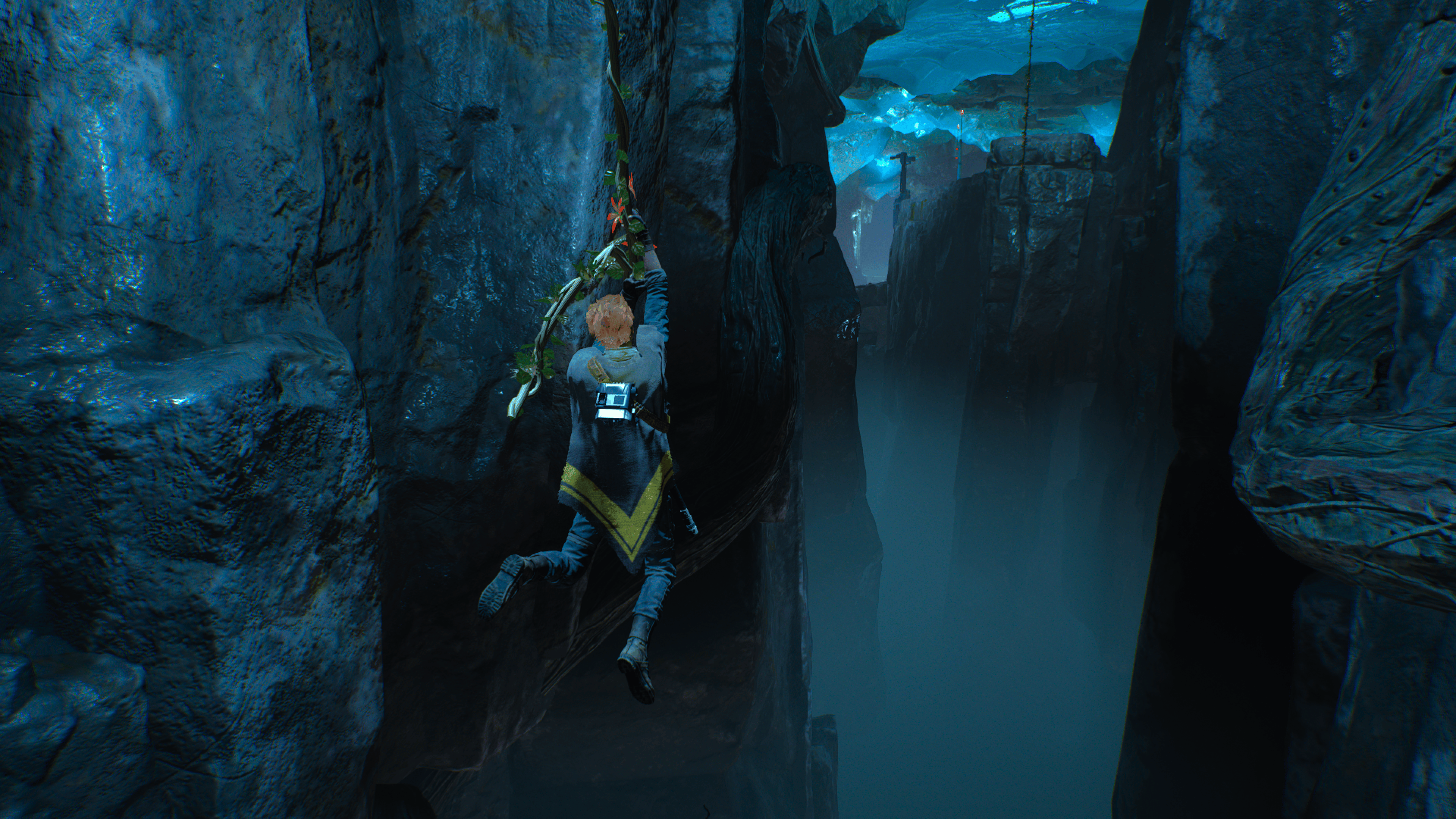
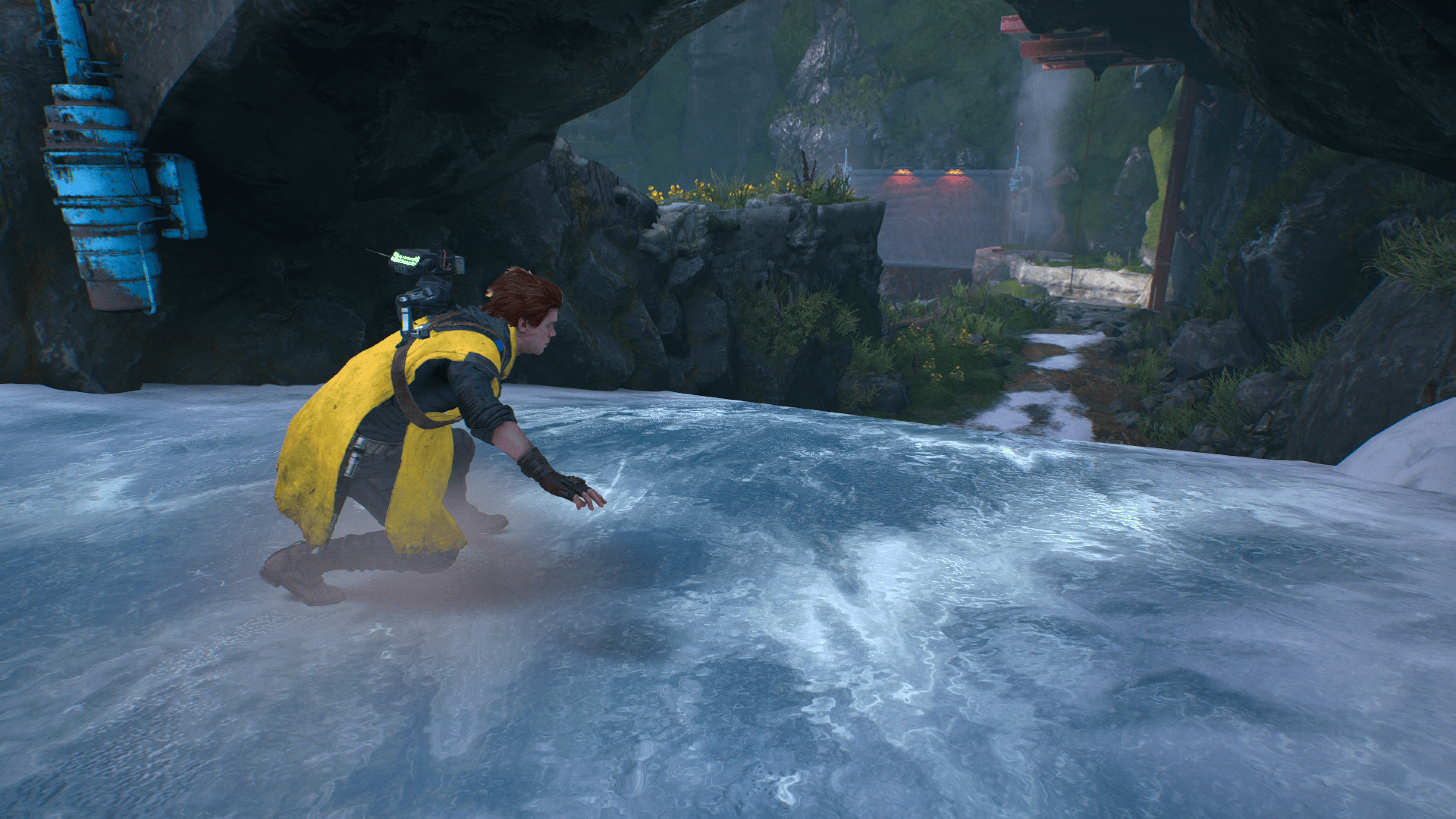
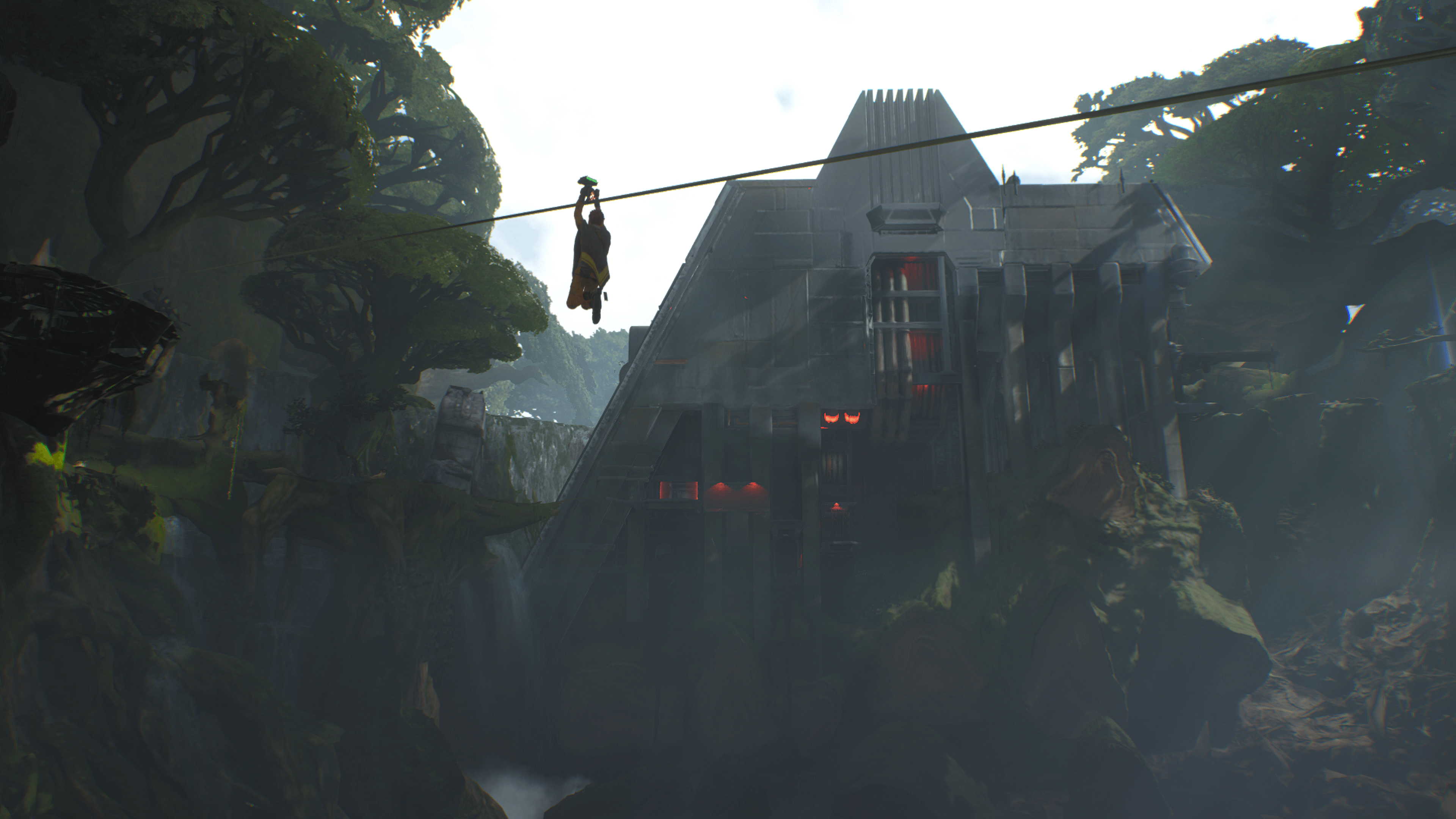
Cal navigates each planet with agility and flair. He can wallrun, double jump, and use a myriad of Force abilities to interact with the environment in interesting ways. All of this mobility makes exploring a joy, reaching heights somewhere between Uncharted, Tomb Raider, and Prince of Persia by sprinkling cinematic set-piece sequences and puzzles throughout the worlds. Despite the fast pace afforded by these features, I personally enjoyed taking slow strolls to soak in the landscapes. Exploring caves while holding LB to raise Cal’s lightsaber to use as a light source is a small touch I will forever love, and the act of hunting secrets was as fun as receiving their rewards.
Collectibles are handled in the best way by being fully within the shipped product-- no lootboxes or microtransactions in sight. Finding and retrieving them results in tangible goodies either via expanded lore or cosmetic customizations. These range from new panchos, skins for the Mantis and BD-1, and individual components for Cal's lightsaber. I would have appreciated some more diverse outfit options, but the current selection is a delightful reward for already enjoyable exploration.
Meditation points dot each world, allowing Cal to rest and spend accrued skill points. Resting restores his health and replenishes healing items, but also respawns previously-defeated non-boss enemies. Simply sitting at one saves the game as well, but Fallen Order fails to mimic the other way that Soulslikes save a player’s progress. Outside of saving at bonfires, those games constantly keep track of the player’s location so if they leave the game then load it back up, they will be in exactly the same place. Fallen Order instead flings the player back to the most recent meditation point which results in lost progress, requiring that they recollect items, re-explore areas, and re-kill foes. It's fortunate, then, that the game at least took a page from The Legend of Zelda's book when it comes to falling to your death by merely placing Cal at his last safe location and chipping away some health rather than forcing a full respawn.
Force abilities and equipment upgrades aren’t unlocked through skill points as one would expect, and instead trickle throughout the campaign during key story moments. Like the Zelda series, Fallen Order teaches the player how to use these features by putting them in a situation that requires their use. For example, Cal learns how to wallrun at the end of a room with only one exit. This exit cannot be reached by any other means, forcing the player to perform a couple of wallruns on their own after the initial tutorial which contextualizes the feature within a real environment and situation. This type of tutorialization works very well for Nintendo and works just as well here.
The camera can be rough at times, bumping into things and being shoved around by the environment and enemies. This rarely impairs navigation, but combat tends to suffer. Possibly the most annoying camera behavior occurs when aboard the Mantis, changing the control scheme to something like tank controls and locking Cal’s orientation to the camera’s. Adjusting the camera’s view is necessary for such an enclosed space, but the execution feels jarring and stiff.
Traveling between planets in the Mantis is handled in a pretty fun way, even if falling just short of its full potential. The player selects a planet at a console on the ship where it then proceeds to lift-off and ascend to space in real-time, entering lightspeed toward your chosen destination. It feels surreal and very immersive until the illusion is shattered by the requirement to sit in a seat in order to finish the process of travel, drawing back the curtain that hid this otherwise inventive loading screen. It is nice that you can explore the ship, meditate, and customize your lightsaber during this time before committing to sitting down which is far and away more interactive than your typical loading screen, but this one blemish does more harm than expected to the immersive experience it was trying so hard to create.
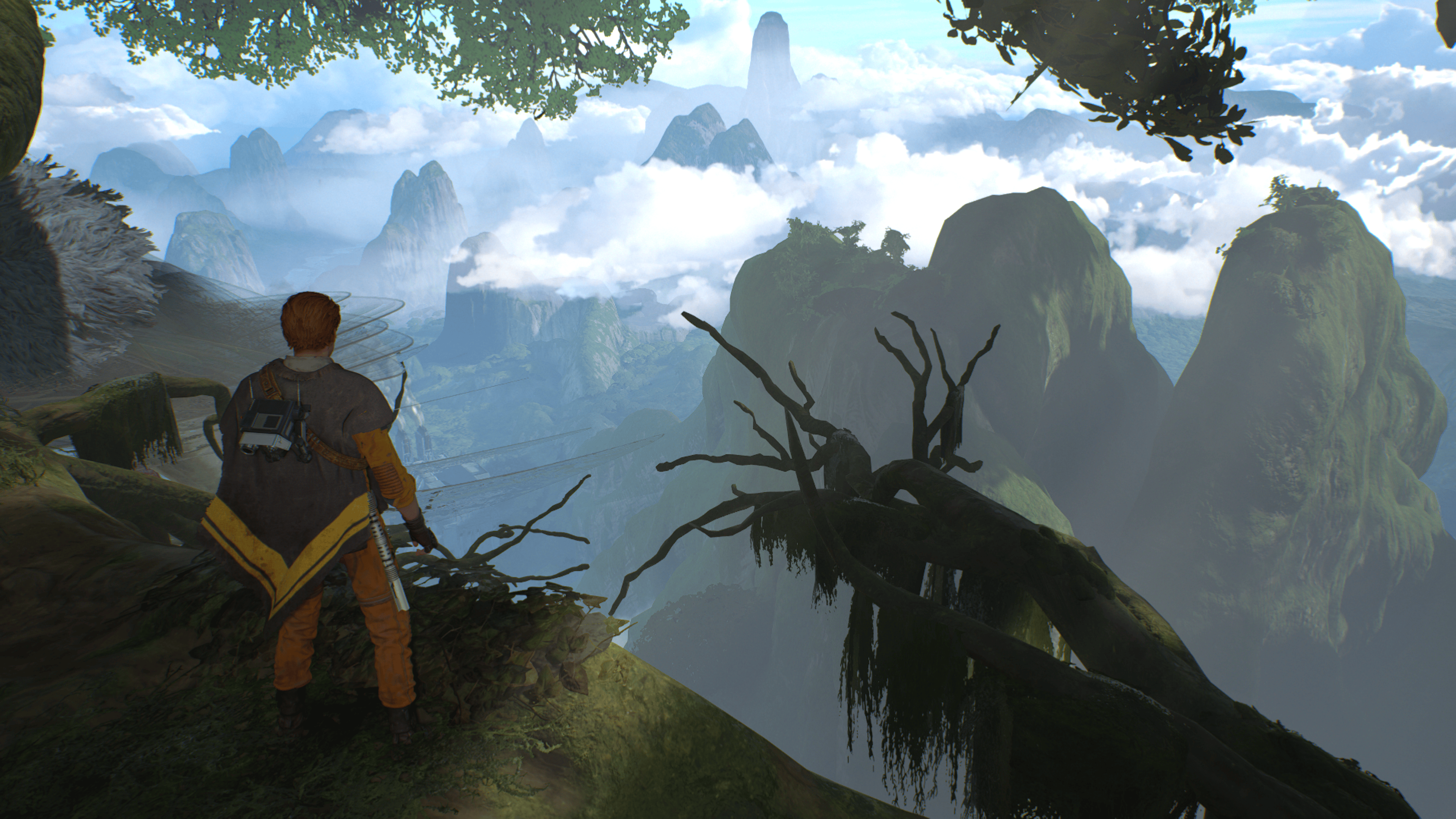
The game looks great, perfectly capturing the visual identity of its source material. As the story is set between Revenge of the Sith and A New Hope, the galaxy is already a dirty and grimy setting that feels war-torn and lived-in. Each location is diverse and home to distinct wildlife and cultures to discover and interact with. The effects on display are highly impressive, too, with very realistic hair and lighting so beautiful you could cry. This exceptional graphical fidelity is sometimes held back by some goofy-looking animations, though, especially on Cal. His swimming animation is strange, and the faster-climbing animation unlocked later in the game is outright terrible. Even Cal’s pause menu animation loop drives me nuts by having his mouth open and close every few seconds. These are petty and unimportant blemishes but they took me out of the experience every now and then.
Pretty as it is, Fallen Order is lousy with performance issues. My entire experience was riddled with stuttering, lighting bugs, wonky physics, and framerate drops. Most frustrating is that the game occasionally freezes if you move faster than it is capable of streaming data for the levels, stopping you dead in your tracks and killing all momentum and immersion. Enabling Performance Mode on XBOX One X helped to alleviate these issues, but not by much. Hugely frustrating are the insufferably slow loading times, especially when respawning. These problems are far-and-away my biggest complaint with the game as they were a consistent hindrance to my enjoyment.
A silly complaint to be sure, but the dismemberment censorship is downright silly. Sure, droids and creatures can lose a limb or feature, but human enemies remain completely intact, much to the dismay of Anakin and Luke. I believe this to be the result of a discrepancy between the way games are rated by the ESRB and the way movies are rated, and also the way both rating systems have changed over the years. Film ratings are far less strict and open to interpretation, whereas the ESRB is notoriously stern. Fallen Order is rated T for Teen, and dismemberment would require an M rating. Releasing an M-rated game for a mostly PG-rated film franchise wouldn’t make much business sense, but it rubs me the wrong way all the same.
It can and has been argued that John Williams is the soul of the franchise by composing some of history’s most fabled and moving pieces of music that everyone can recognize in a heartbeat. As such, many non-Skywalker Saga works tend to try and emulate his sound and otherwise directly pull from his scores in order to seem genuine. Fallen Order lands in the same category and does so in spades with a fantastic original score with other pieces ripped directly from the films. Exploring is filled with wonder, combat is intense, and cinematics feel like deleted scenes from a legitimate Star Wars film.
The cast is performed excellently by their respective talent. Cal’s (Cameron Monaghan) development can be felt in his cadence and tone as you progress; the Second Sister (Elizabeth Grullon) exudes eloquent disdain and regal mockery so perfectly that she’s absolutely magnetic; Cere’s (Debra Wilson) pain and hesitation says everything about her past without needing to show and tell. I don’t have a single complaint in this department. It was also such a treat to see Dee Bradley Baker reprise his role as the clone troopers.
Fallen Order’s UI is clean and reserved with only a health bar in the bottom left, contextual button prompts for interactables, and a few more bars during combat. New information such as location names and lore excerpts display on-screen dynamically. Your map is a completely diegetic hologram projected by BD-1, not only looking very Star Wars but also far more functional and useful than I expected. The player is given a lot of control over the orientation of the map and all important information is presented with color-coding and a legend for reference. Trying to 100% the game is made a far less arduous endeavor because the map breaks the planets up into named sections, showing the exact number of secrets and collectibles in those sections as well as the total for that planet at the very top. It’s a fantastic map, all things considered, even if some of the visual design can get muddied by the homogenous blue hologram style.
I was floored when Darth Vader appeared at the end of the game and absolutely wrecked house. The sequence was surprising, fun, and cool. Running away from Vader powerfully flips the player’s confidence on its head by making him an impossibly overwhelming force that Cal stands no chance against despite leading up to the fight against Trilla by fulfilling the Jedi power-fantasy we all crave with a few waves of Stormtroopers and a few tougher enemies sprinkled in. I also love that defeating Trilla and seeing her begin to give in to Cere before being cut down by Vader echoes Darth Maul's final moments with Obi-Wan from Rebels.
Cal’s flashback to Order 66 is a chilling moment for any Star Wars fan. Seeing the event from a padawan’s perspective is terrifying and Cal’s specific experience effectively illustrates why he’s so damaged.
This is an incredibly important game. EA infamously stated that its player base does not want singleplayer games, deftly attempting to justify churning out Battlefield clones in a Star Wars skin designed to drain wallets through despicable lootbox practices that we’re all too familiar with. Fallen Order is a powerful rebuttal, standing in direct opposition to EA’s claim by being exactly what we ‘didn’t want’ yet selling and reviewing incredibly well.
Ignoring the business side of this story, the game is fantastic on its own. Its well-crafted narrative, alluring characters, lively combat, and thrilling platforming will keep you invested the whole way through. It’s the game we need and deserve, despite some glaring technical issues. Star Wars Jedi: Fallen Order delights by investing so much of its art, sound, and time in a universe adored by all in a complete package uncorrupted by lootboxes, microtransactions, or DLC.
Pros
- Fun, challenging, and fair combat
- Metroidvania-esque world design
- Unique and exciting story with strong characters
- Feels authentically Star Wars
Cons
- Extremely buggy from beginning to end
- Half-baked save system





LIKE
Similar Games
- Uncharted 4: A Thief’s End
- Bloodborne
- The Legend of Zelda: The Wind Waker