
Halo: Combat Evolved
The Master Chief Collection

- Intro
- Story
- Gameplay
- Presentation
- Spoilers
- Conclusion
Halo is a fundamental, immovable pillar of the industry; forever changing the way that first-person shooters would be structured and controlled.
I first played Halo with my uncle and some of his buddies at a gaming cafe called Fanat.EXE in Springfield, MO back in 2001. We all took turns playing bits of the campaign in split-screen co-op on the Xbox and eventually threw down in some PVP for an hour or two. It's a memory that's very precious to me that I can still vividly remember to this day!
The bulk of my experience with the game would be through Gearbox's PC port years later, where I tackled the first couple of missions before eventually shelving the story altogether and instead devoting the entirety of my time with Halo to its online multiplayer.
It's this very period in time that led to the inception of my handle. My uncle named his profile HaloKitty and I wanted something similar while incorporating my own interests of the time, the most recent of which was Crysis. Thus, CryKitty was born and has stuck with me ever since.
Halo's storytelling is pretty remarkable for its time, especially for a first-person shooter. While sometimes contrived and near-aimless, the magic is how beautifully the dialogue flows due to the lack of exposition. Little details help take the load off the writing by fleshing out the setting and planting seeds for late-game plot points and even future entries in the series.
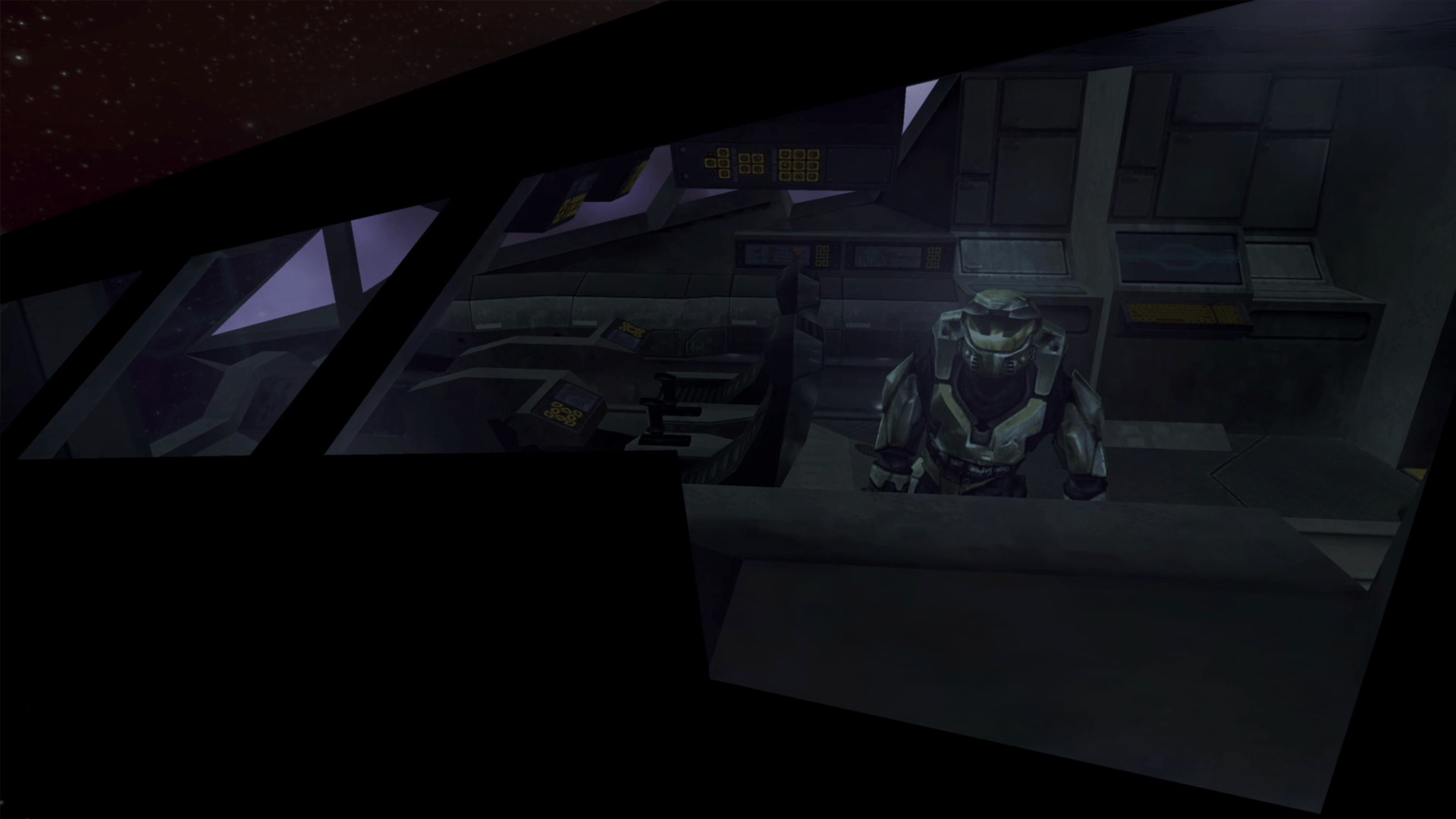
There are a handful of references to Reach, for example, as early as the opening cutscene. Using only what's provided in this game, the player can infer that Reach is a location where humanity had its ass handed to them by the Covenant, which swiftly and efficiently establishes the conflict between the two forces.
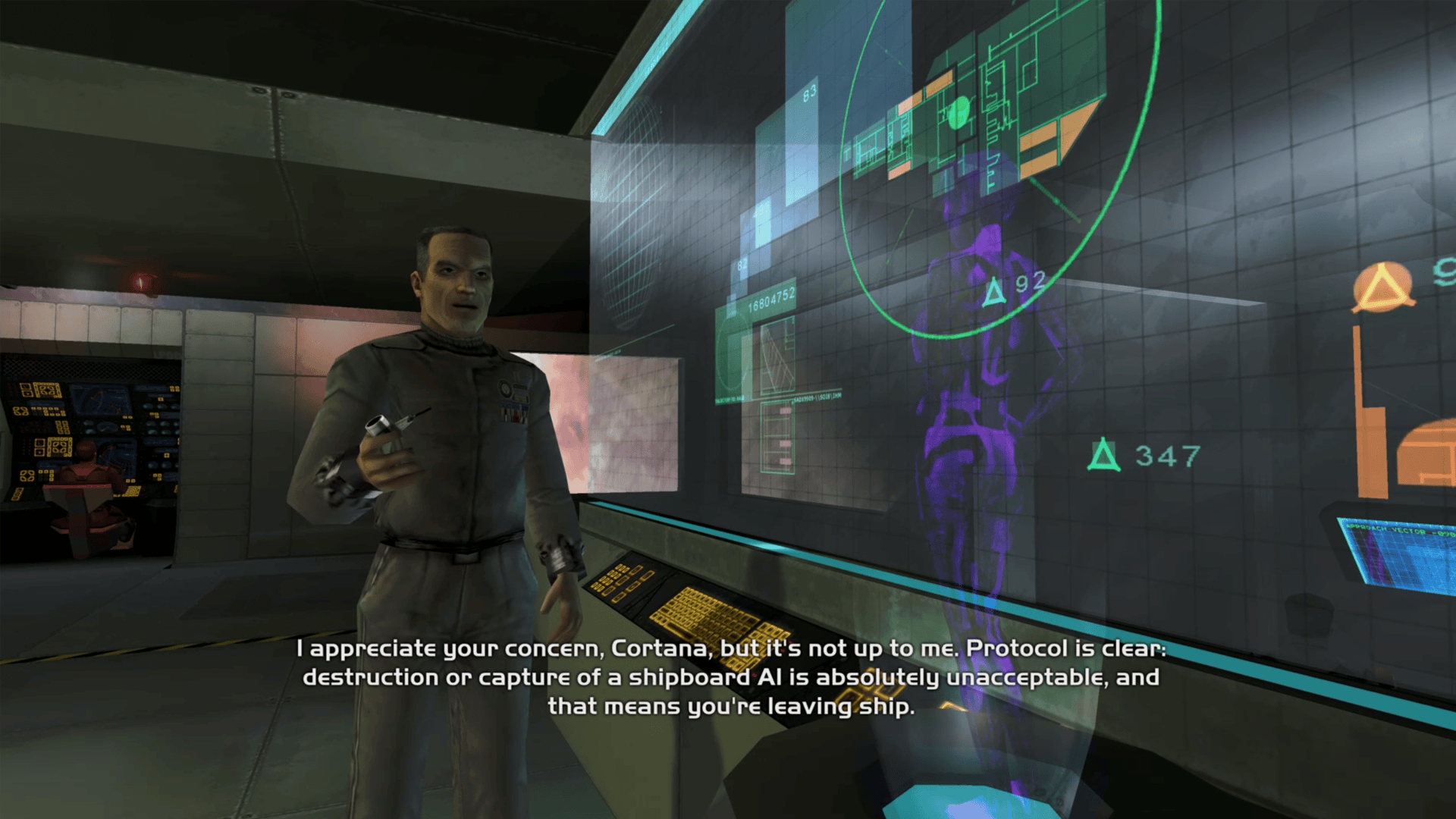
Another detail that first-time players will likely miss is when Captain Keyes orders Cortana to upload emergency landing zones to his neural lace. This line makes enough technobabble sense in the moment that the player won't think much of it beyond "the captain is staying behind and this A.I. chick is leaving the ship with me", fully unknowing that this brief interaction serves as the basis for an objective near the end of the game. I think it's just astounding that Halo is able to squeeze in something so important to the plot so that it's present for those that want to check the story's math later while conveyed through one line of dialogue and thus is short enough so as to not halt the game's mesmerizing flow.
Progressing through the plot means tackling a variety of objectives in each of the game's 10 missions. These are easy to grasp, fun to tackle, and slowly reveal the greater setting by peeling back the layers of the UNSC, the Covenant, the Forerunners, and beyond.
Intrigue and atmosphere are core to the experience of Halo almost as equally as its now renowned gameplay, and it delivers on both with skill and subtlety. Locales are washed over with an eerie emptiness that exudes isolation and exemplifies the artificiality of the Halo ring. Ancient yet advanced alien structures appear untouched for an unfathomable length of time, establishing history. The interiors of each species feel completely distinct from one another from the Covenant's bright colors and soft edges to the UNSC's hard, cold, technology-forward details, there's no mistaking the architects of your environment at any point.
Pacing is carefully constructed and fine-tuned for the majority of the campaign, Bungie showcasing their famously coined 30 seconds of fun throughout. Some of the missions in the third act do end up feeling like padding and I found them especially frustrating in my first time through, though it's worth noting that the meandering nature of these later levels add to the intentional dread and desperate atmosphere being established and I have actually grown to appreciate them for this reason in subsequent playthroughs.
Halo possesses only a handful of actual characters, though they remain enduringly iconic. There isn't much to say about the Master Chief at this point, but he's a solid viewpoint character that the player can latch onto. He rides the fine line between conveniently mute and enigmatically stoic, and professional. Most of how the player feels about Master Chief actually comes from those around him with marines oohing and aahing at his presence, higher-ups displaying respect, and enemies cowering in fear. This sort of second-hand character-building gives you a sense of his personality in spite of his minimal dialogue.
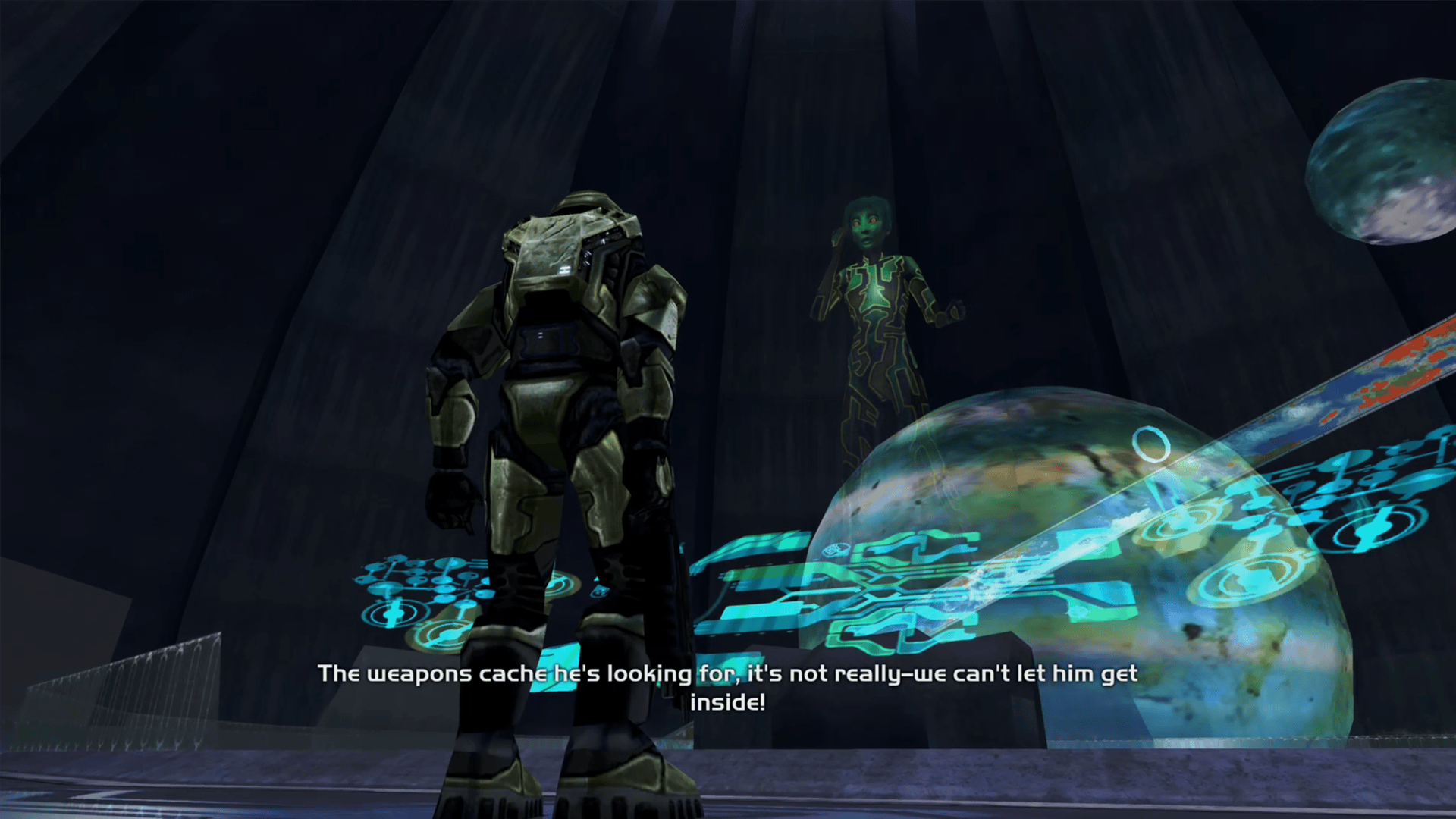
Cortana, on the other hand, is a weird case for me. It seems like she was written by different people at different points in the campaign, such that around mid-way I thought she was turning into a villain only to see her return to normal on a dime right at the end. Even on subsequent playthroughs with all context that this first entry provides, her sudden mood-shift feels completely out of place. She's so suddenly antagonistic to Master Chief for no apparent reason, making it obvious, in hindsight, that her cryptic and vague dialogue serves only as a literary device to withhold the upcoming reveal from the player so that its discovery through gameplay can be more effective. While completely understandable, because I certainly wouldn't want the reveal to be handled any differently as it's a potent example of the game's excellent environmental storytelling, I cannot help but feel that Cortana's side of things could've been written and presented at least a little better.
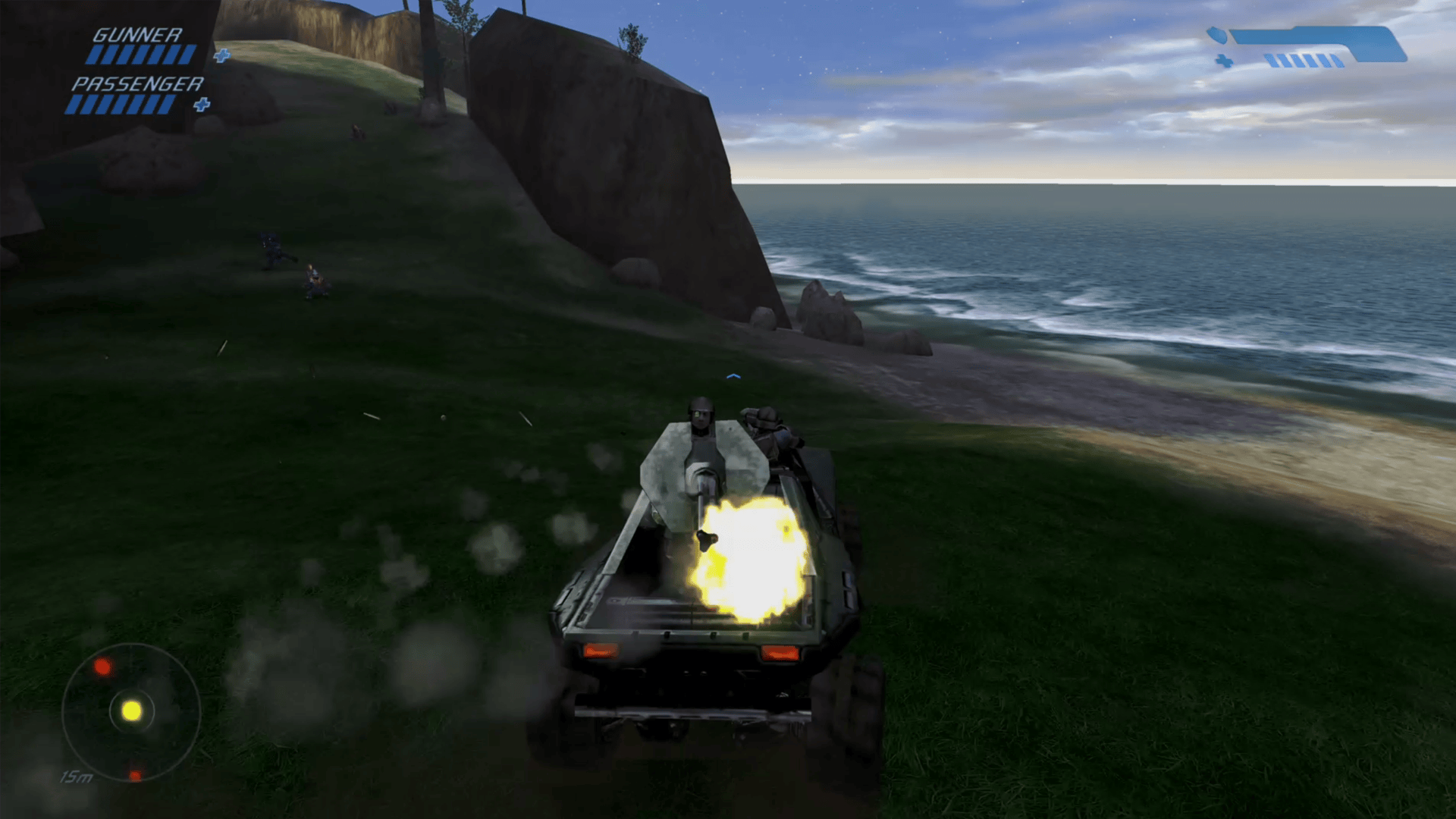
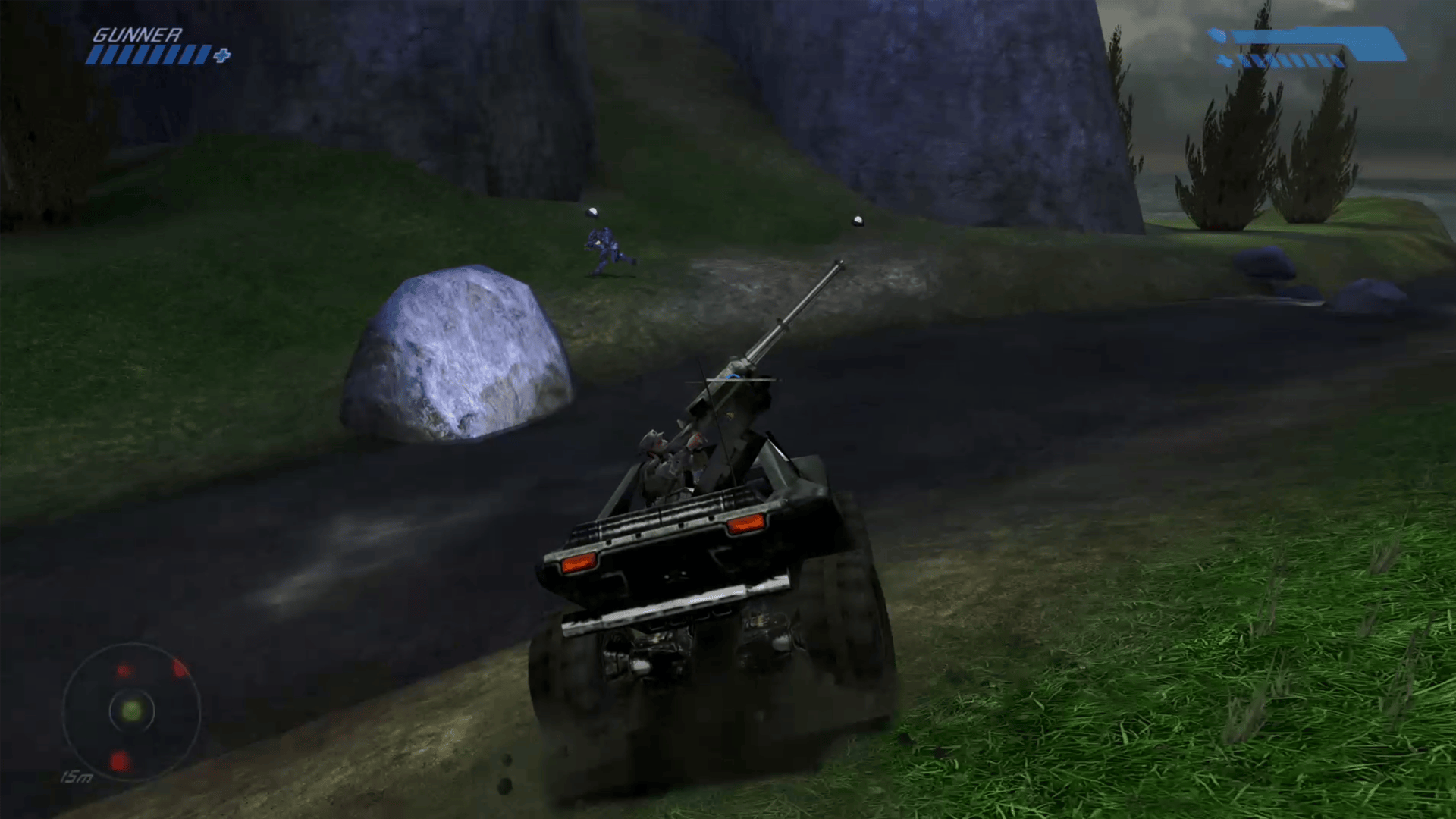
Gameplay is possibly Halo's most important and strongest aspect of the experience. Shooting feels punchy, jumping has this low-gravity feel that makes midair gunning satisfying, driving is revolutionary because of the way it uses your camera to steer, and the level design often keeps you going in the right direction at all times without you even realizing it while remaining visually interesting and believable.
I'm not sure it can be overstated how impressive the controls Halo's controls are, especially for its time. If the perspective is lost on you, think back to any first-person shooter you've played since 2001. I can guarantee you with 95% certainty that they were influenced and possibly morphed by Halo's innovations in aiming and button-mapping. Using the left analog stick to move and the right stick to aim was a big gamble that gaming publications and players scoffed at prior to release because of the few failed attempts from games that had tried such a scheme before. What set Halo apart from every single console FPS for its time was the numerous under-the-hood technologies that made it not only feasible, but enjoyable to aim and shoot with a controller. Acceleration helps the player with reactionary aim; friction slows down their aim if their cross-hair passes over an enemy; snapping soft-locks onto their target, and magnetism makes hit detection a bit more generous. The culmination of all of these ideas and technologies result in a console FPS that feels really, really good to play to this day.
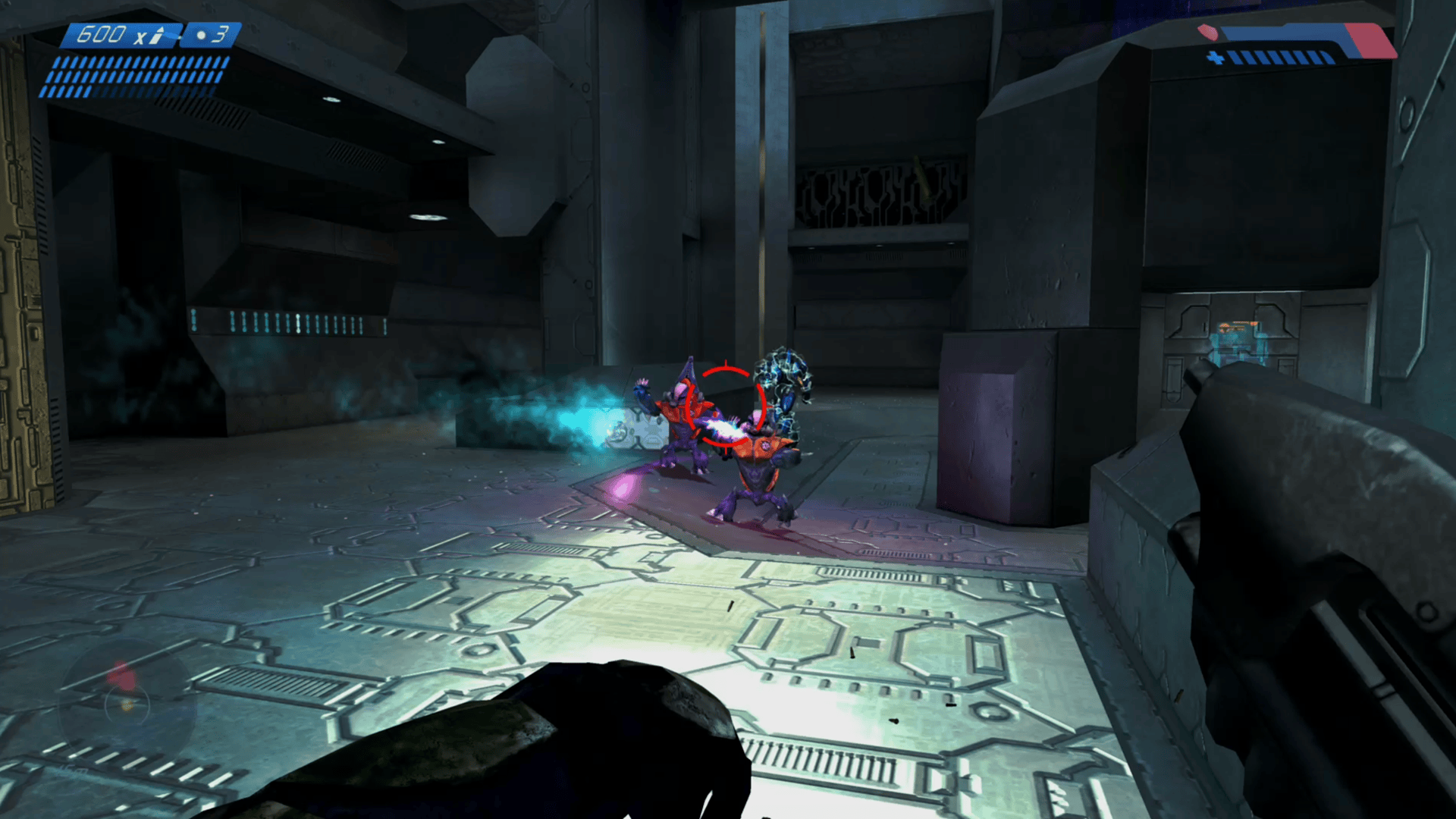
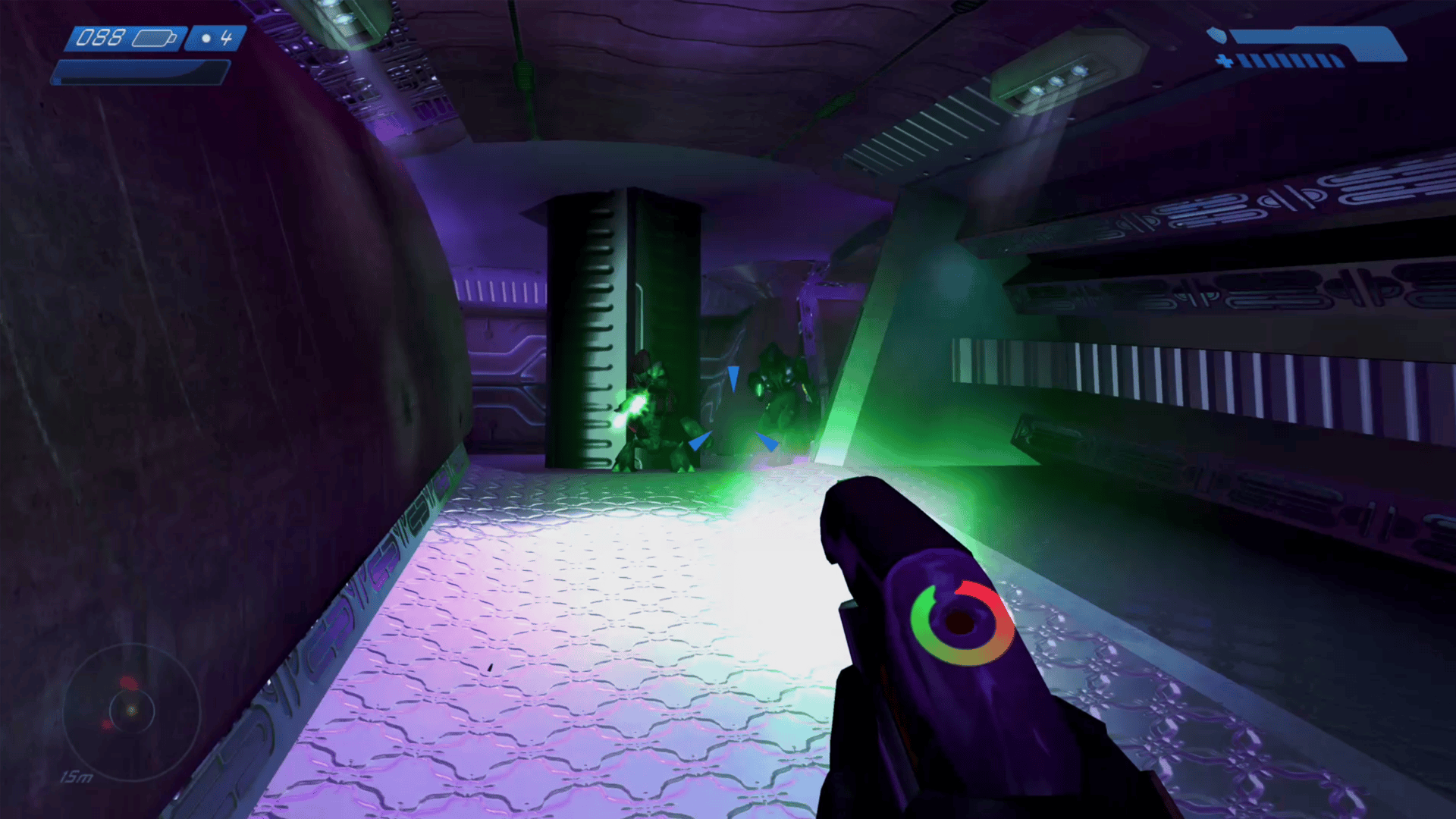
A large contributor to Halo's longstanding success is its delightful variety. In one moment you'll be shooting your way through Covenant in tight close-quarters, the next you'll be driving atop rolling hills and through manufactured caves, and sometimes the game will ask you to not shoot anything at all. Combat encounters also see a great amount of variety through different weapons, level layouts, and enemy types. Because you are restricted to only two weapons at a time, the player is always considering which ones to bring into a scenario rather than forgetting about half of your arsenal until you merely run out of ammo of the weapons you normally stick to in FPSs of the past. Opponents have a variety of weaknesses and behaviors that can be exploited with specific weaponry, so while you may be more comfortable with a magnum and assault rifle, you'll end up saving a lot more time, hassle, and ammo if you replace one of them with a plasma weapon to deal with Elite shields later in the game. The juggling of all of these elements means that no matter how many times you play the game, there's really no becoming tired of its offerings.
Something that really stood out to me both at the time of release and especially today is the game's artificial intelligence. I cannot count the number of times that both the enemy and friendly A.I. surprised me, whether it's because they exhibited unique personality traits, used actual tactics in combat, or simply behaved in unexpected ways. The small grunts might be fodder, sure, but even they're aware of this and will often flee for their lives when the going gets tough, which opens up interesting tactics for the player. For example, if you manage to stick a plasma grenade on one of the little suckers as he retreats to the safety of his group, he's unwittingly serving as a reverse suicide bomber and destroying them from the inside. The other enemy types have interesting and intelligent behaviors as well. They'll try to flank you, utilize cover, and even attempt to reach high ground to get the upper hand. There were even a few times where the enemies did things that I would have never expected, such as shattering a glass platform from beneath my feet, forcing me out of my advantageous position and right in the middle of their higher numbers. In another instance, an Elite ran me over in his ghost and as I waited to respawn I could hear him laugh at me which got a good chuckle out of me in return!
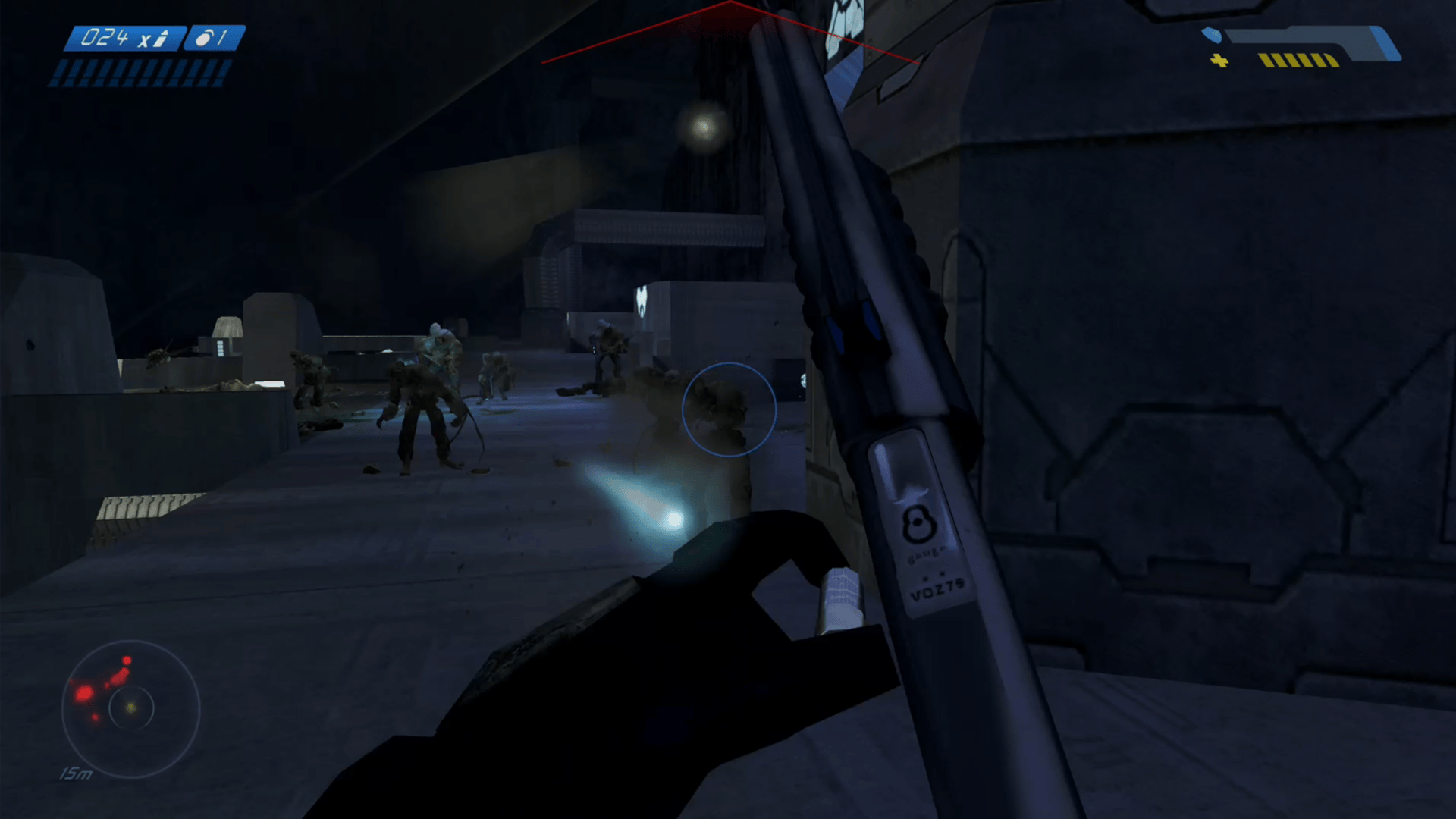
While a lot of the level design is commendable, I found later missions to be a bit meandering, somewhat nauseating, even. The Forerunner's inner architecture of the Halo ring is pretty monotonous, and it can seem like you're going in circles sometimes because you'll pass through copies and copies of the same structures and rooms for extended periods of time. It doesn't help that these later missions are filled with unfair encounters that will kill you very quickly, so a lot of the already repetitive content is literally repeated far more than they should have been. There were a handful of times where I became lost in these levels due to their monotonous symmetry that makes finding one's way through the spaces fairly confusing. What has helped tremendously in subsequent playthroughs, though, was discovering that the entrances and exits of each room in these areas are marked with arrows. It's a tried-and-true level design trick, but one I honestly didn't notice my first time 'round.
Halo's infamous backtracking through some of its levels feels unavoidably lazy. There are only a handful of times that their inclusion can feel justified as storytelling tools, but the majority are blatant padding. The two successful uses that come to mind are The Maw and the second half of 343 Guilty Spark. In both cases, the exploration of the same level in reverse highlights their respective story moments in interesting ways. Trudging through the lifeless husk of the Pillar of Autumn contrasts so starkly with how shiny, deep, and powerful it appeared at the beginning of the game. Its destruction demonstrates how fragile humans are in an intensely personal way because of the time spent in it during the introductory mission. Similarly, pushing backward through 343 Guilty Spark functions as a satisfying payoff to the slow buildup to the big story reveal that takes place just prior. Lastly, Two Betrayals is simply one of the more enjoyable missions not because of the backtracking, but simply despite it. Navigating the more open environments serves as a refreshing reward for navigating the labyrinthine Library mission, and getting to pilot a Banshee is just pure fun. It helps that alongside this satisfying gameplay is the absolute banger of a tune that is On a Pale Horse which makes you feel utterly unstoppable.
One of the things I think Halo does very well is establish atmosphere. Picking the game back up so many years later instilled me with the same wonder that it did back when I first played it on the original Xbox. Stepping onto the Halo ring and looking up to see the other side of it is a pretty surreal feeling, and the enemy placement, scripted narrative sequences, geometry, and music ooze this unmistakable Halo vibe.
Because Halo is set in a science fiction setting, Bungie was able to take a lot of liberties with character and environmental design. The game is bursting with color, for example, which can be seen in every facet of the game's art. Elites wear colorful armor that not only helps them pop, but informs the player of their general skill since the different colors represent a rank within the Covenant. Plasma weapons pump so much energy into every fight because of the way they fizzle, pop, and streak across the screen.
Both the original graphics and Anniversary graphics have their ups and downs. While technically impressive, I find that Anniversary's fail to convey the original's charm and that incredible atmosphere. It is tough to deny, however, that the newer generation of gamers will likely prefer its added detail, higher resolution, and more complex lighting and geometry than what the original was capable of.
I found the game's audio mixing to be pretty horrid. Voices are often muddled amidst the sounds of warfare and the musical score, rendering subtitles absolutely mandatory if you care to pay attention to the narrative. The bigger sin, though, is the inability to adjust volumes in any capacity to alleviate these issues. I hold this especially relevant for the Master Chief Collection which would have been designed with modern sensibilities and standards in mind, and thus should be able to accommodate the wide range of audio setups that exist today-- except that it doesn't. The PC port that released in 2019, a full 5 years after the Xbox release, did add audio sliders but the console audience is still out of luck a year later.
That said, the audio quality itself is pretty great! Guns burst and blast satisfyingly, and each sound distinct enough to tell apart in the middle of a fight. The voice-acting is strong as well, with no real weak points to speak of. Ambient sounds are also solid, grounding the actions of the player, their allies, and enemies in the world.
One of the most famous aspects of Halo is its soundtrack, and there's a good reason for that. Marty O'Donnell composed one of gaming's finest musical scores that remains timeless. The unexpectedly appropriate Gregorian chant in Halo's theme song is so universally recognizable that I've talked to people who hadn't touched any game in the franchise but could recite it. One of the things that surprised me about the score is how understated it tends to be. You'll often find it choosing to linger in the distance so as to provide an adventurous tone, only actually getting in your face when you want it to: while driving and shooting. I'd say the only blemish in this department is the abruptness with which songs dynamically transition and fade based on what the player is doing and where they are. It's a revolutionary technology, but this implementation felt rough around the edges in a world where Final Fantasy VII Remake exists. Though every song is great, standout tracks for me are A Walk in the Woods and On a Pale Horse.
Further lending to Halo's tremendous atmospheric quality is its HUD, which does a lot to immerse the player in the setting. Overlaying Master Chief's own helmet HUD onto the screen is an effective method of putting the player in his shoes in a subtle way while still giving you all of the information you need. I'd say the only stumble here are the atrocious tutorial boxes in the beginning, though this is a minor nitpick at worst because they are very few and completely front-loaded.
Continuing from the story section of the review, what is going on with Cortana when she's connected to Halo's control room? Her body turns green, her eyes turn red, and she becomes suddenly aggressive and antagonistic. Even stranger is that none of the characters call attention to this, and when she returns to the chip and is re-inserted into Master Chief's helmet it's as if none of that ever happened. I think it could have been cool if her personality shift led to something meaningful, but because it doesn't, I can't help but instead see it as a blemish in either the writing, direction, or both.
While we're on the topic of Cortana, how exactly did she convert the Index into a digital thing that only she can possess? Did the Index basically function like a USB drive, and Cortana just cut/pasted the data from its hardware to her own then decided to keep its visual representation in her hologram? These are the questions that keep me up at night!
It's revealed that the purpose of the Halo rings is to wipe out all organic life in the galaxy, thus starving the Flood by killing its food. This is all well and good, but then why do the rings have livable inner-surfaces? Maybe later games in the series touch on this, but at this point, I feel like a lot of questions go unanswered and the player is thrown from objective to objective without ever being given the chance to reflect or dive deeper into these aspects of the lore.
The 'final boss', if you will, is pretty weak in terms of gameplay. Throwing grenades and/or shooting rockets into the exhaust vents is purely an exercise in frustration due to the lack of feedback the player receives. You never really know if you doing the right thing until the vents eventually explode. Yes, the mission says to do as such and the vents are marked on your HUD, but they aren't designed to be obviously vent-like or even destructible, so the lack of feedback might lead you to ponder if you're missing something. Narratively, I think it's actually pretty cool that the villain isn't a stereotypical bad guy and is just a robot trying to do his job.
I love the idea of the warthog section in the final stretch of the game, absurd as it is for such a track to exist on the Pillar of Autumn to begin with, but most of the maneuvers it expects the player to pull off are ridiculous because they don't accommodate the physics of the vehicle. It asks you to clear gaps that you can't do smoothly and make landings that are almost guaranteed to flip the warthog over. Simple realignment of the ramps could have resolved these issues, but as it stands you'll likely have to flip the warthog right-side-up at least a couple of times. Still, I can't help but admit how fun the section is as a whole.
Problems aside, there is no denying the monumental achievement that is Halo.
It redefined an entire genre for years much in the way Call of Duty 4: Modern Warfare would years later (which is another series that was influenced by Halo), and is still one of the world's largest, most widely recognized and critically-acclaimed gaming franchises.
For all of its minor flaws, I had a really good time playing the game and am happy to have finally beaten it so many years later.
Pros
- Intoxicating & Rewarding Combat Sandbox
- Slick Writing
- Unique & Palpable Atmosphere
- Brilliant & Timeless Soundtrack
Cons
- Some Repeated & Monotonous Level Design
- Inconsistent Characterization
- Poor Audio Mixing






LIKE
Similar Games
- Half-Life
- Star Wars: Battlefront (2015)
- Call of Duty 2