Video game developers don’t get much more controversial than Peter Molyneux, creative director and co-founder of Lionhead Studios. He’s infamous for over-promising to the public, hyping up his projects to unreasonable proportions that we simply weren’t used to seeing back in the day.
Many are quick to attack Molyneux for this reason as they feel rightfully lied to when they purchase a game not meeting the expectations set by him, but I tend to stand by a different perspective. To me, Peter Molyneux is simply ambitious and truly cares about his products, fully intending to fulfill his ‘promises’ before being gated by technology, money, or deadlines. Sure, outright saying that your game will do specific things feels like the absence of those things are a lie, but what people seem to fail to consider is that many ideas are scrapped during the development process.
Fable might not live up to the hype built-up by this enthusiastic creative mind, but it succeeds in capturing the imagination of its players and more importantly in challenging the standards of its genre.
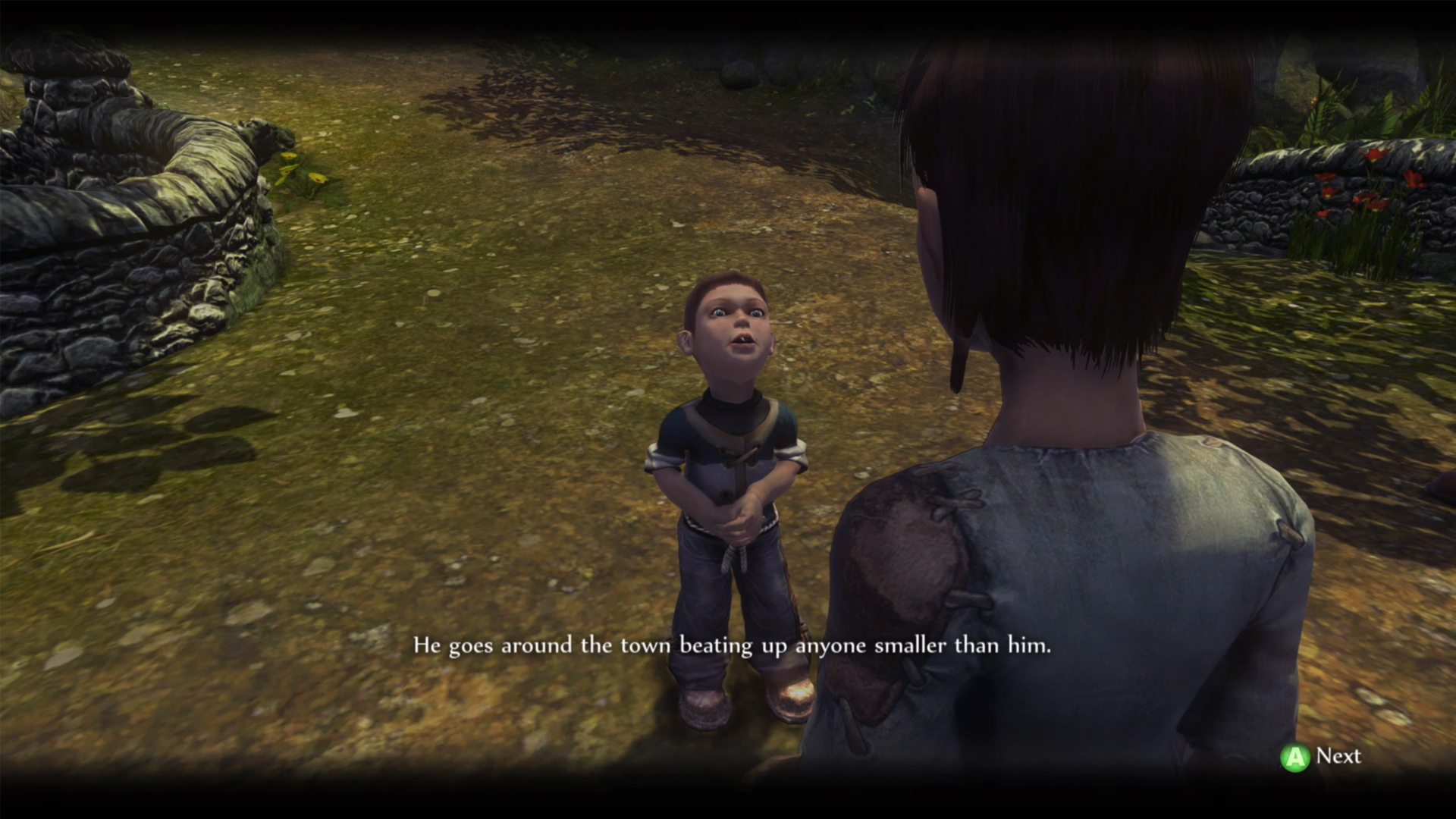
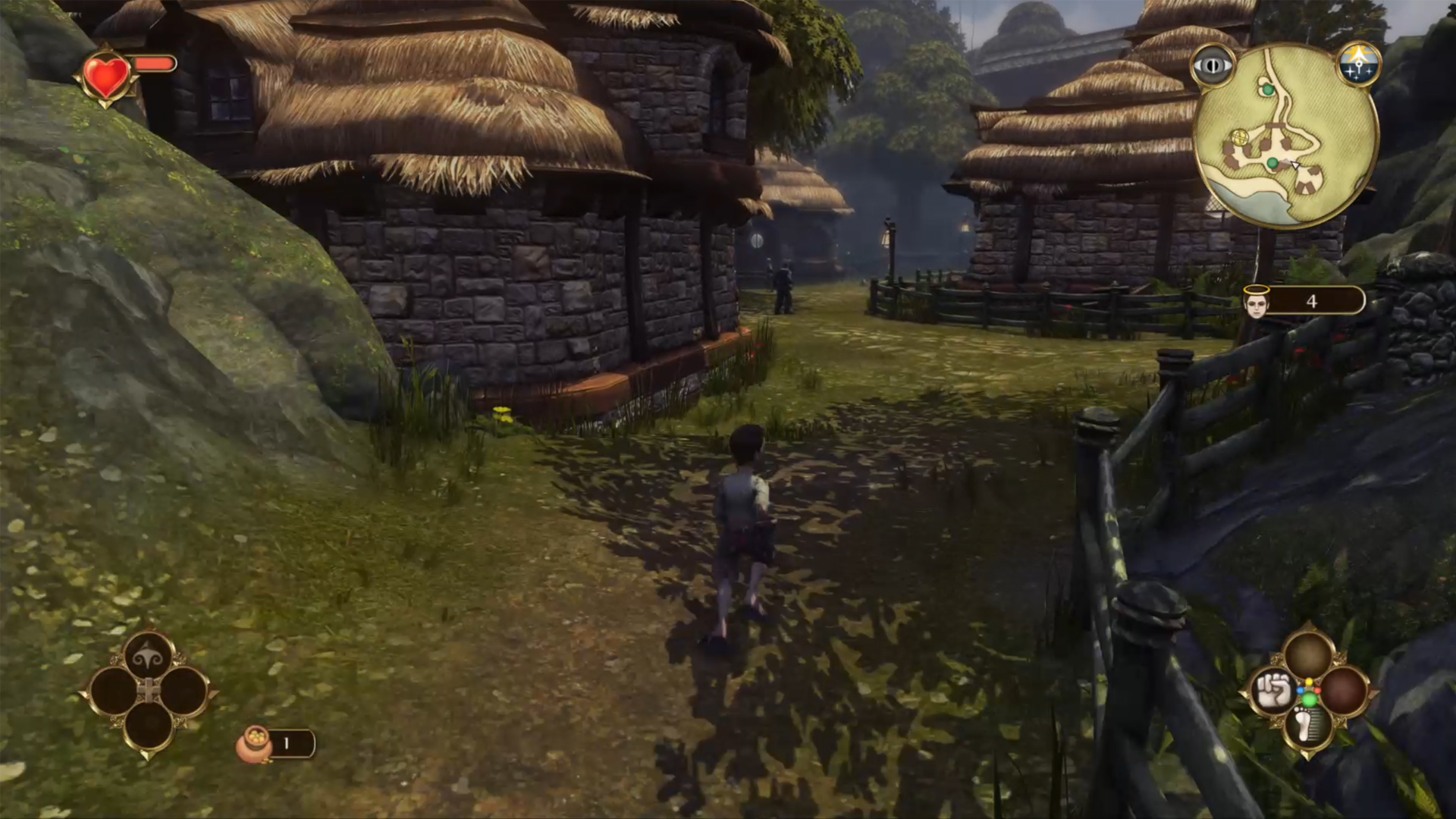
After an incredibly generic and on-the-nose cinematic comprised of artistic stills lays bare the flimsy nature of your character’s moral compass, Fable opens on your sister Theresa’s birthday. Your father tasks you with assisting the townsfolk in exchange for gold, each good deed netting a single gold piece with which you can save up to purchase a birthday present for Theresa. The errands present moral dilemmas to dip your toes in Fable’s alignment pool, but regardless of your decisions in this introductory area, misfortune befalls your hometown of Oakvale. Bandits slaughter the villagers, including your father, while kidnapping your mother and sister. Just before meeting a similar fate, a mysterious man whisks you away to the Heroes’ Guild, a sort of school that trains Heroes. These aren’t heroes in the sense that they’ve performed amazing feats or saved the world, but more akin to certified mercenaries.
For the most part, the story is mildly interesting if roughly executed. Admittedly charming writing gives characters some personality and the lore is gripping enough to keep you going despite never diving deep enough, but the plot is suffocated by some rather archaic gameplay blemishes that we'll delve into later.
Most of Fable’s appeal stems from the way it adapts and bends to the player's actions. Illustrating this malleability is character morphing, which results in their character visually reflecting the moral alignment of their choices. However, the ramifications and consequences are disappointingly superficial and surface-level. The story itself remains entirely unaffected by the player and their alignment can be completely flipped with enough gold. I concede that a perfect solution likely doesn’t exist for this problem because keeping good and bad options open unfettered by the player’s alignment is fairly player-conscious, especially when presented with a decision that is perhaps a little too evil or too good for their taste. However, what results is an experience that feels like you’re inconsequentially teetering on the center of a seesaw with no risk of tumbling down either side in an unrecoverable way. Imagine a Fable where each alignment has distinct branches that expand the further you progress down one side. Pure evil characters might be presented with a handful of exponentially evil options and maybe a single good one in any scenario, and vice versa. As it is, there's no denying how captivating it is to walk along the tightrope of morality.
Fable’s controls are sluggish and odd, and the unintuitive button mapping exacerbates the strangeness of the game’s mechanics. Holding RB to block is innocent enough, but tilting the analog stick in any direction while blocking in order to roll is inarguably poor design. It means that blocking is a purely stationary act and the nature of what should be a split-second reactionary tactic in rolling requires too much thought and input to achieve in a reasonable span of time. Holding the right trigger and pressing B to sift through a static list of spells is incredibly cumbersome mid-combat, lacking any amount of customization or semblance of convenience. Clicking the left stick down to zoom in with your ranged weapon is clunky and having multiple levels of zoom means those levels get in the way of backing out to the action when you need to tackle enemies that are hacking off your legs. This particular issue could have easily been solved by changing your control scheme based on whether you’re using magic, ranged, or melee rather than having all options all the time.
There is no middle ground when manipulating the camera. It is either stiff as a board, lacking any sort of dynamic movement and adjustment, or is otherwise nauseatingly flung around by the slightest nudge of the analog stick.
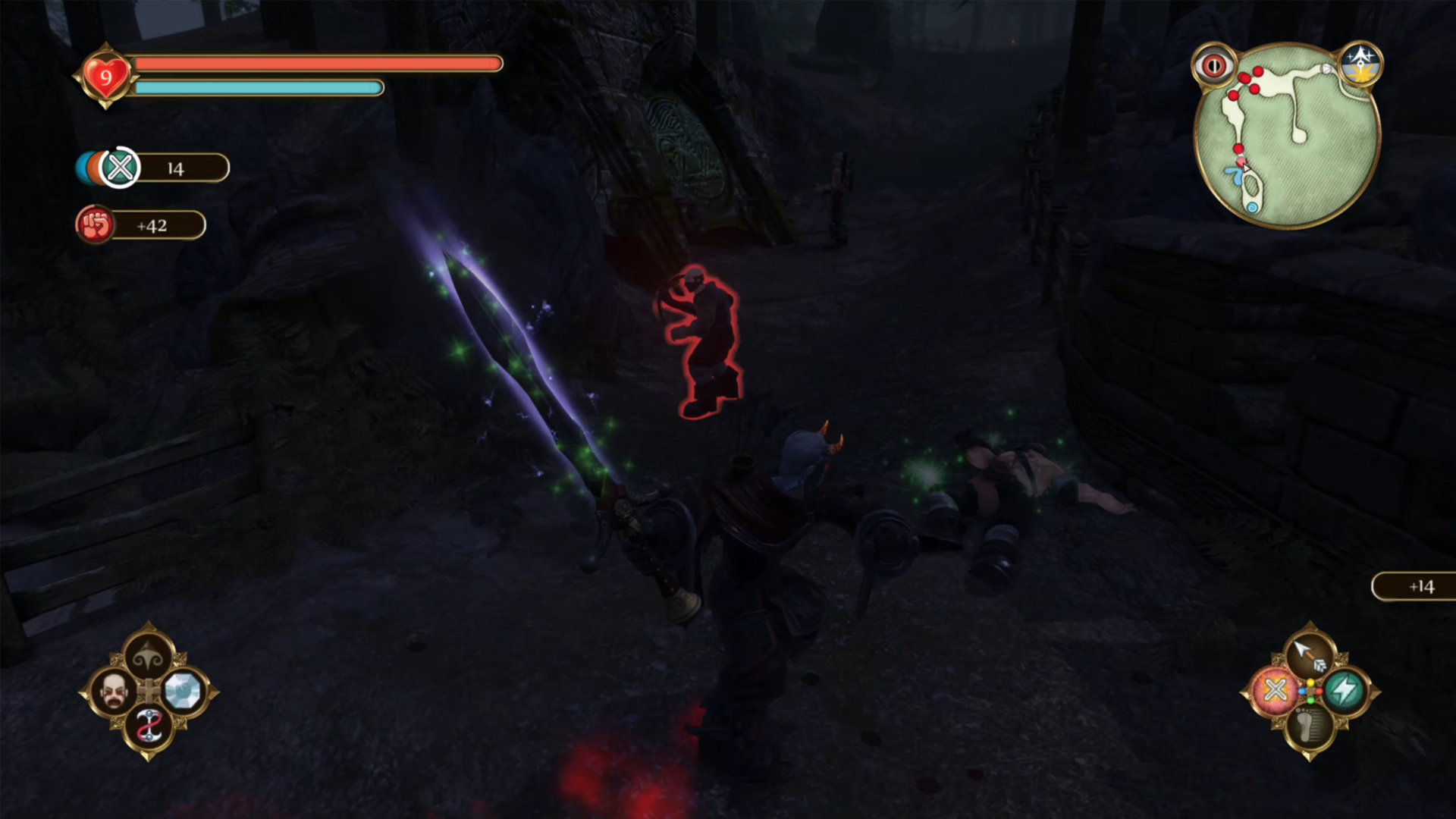
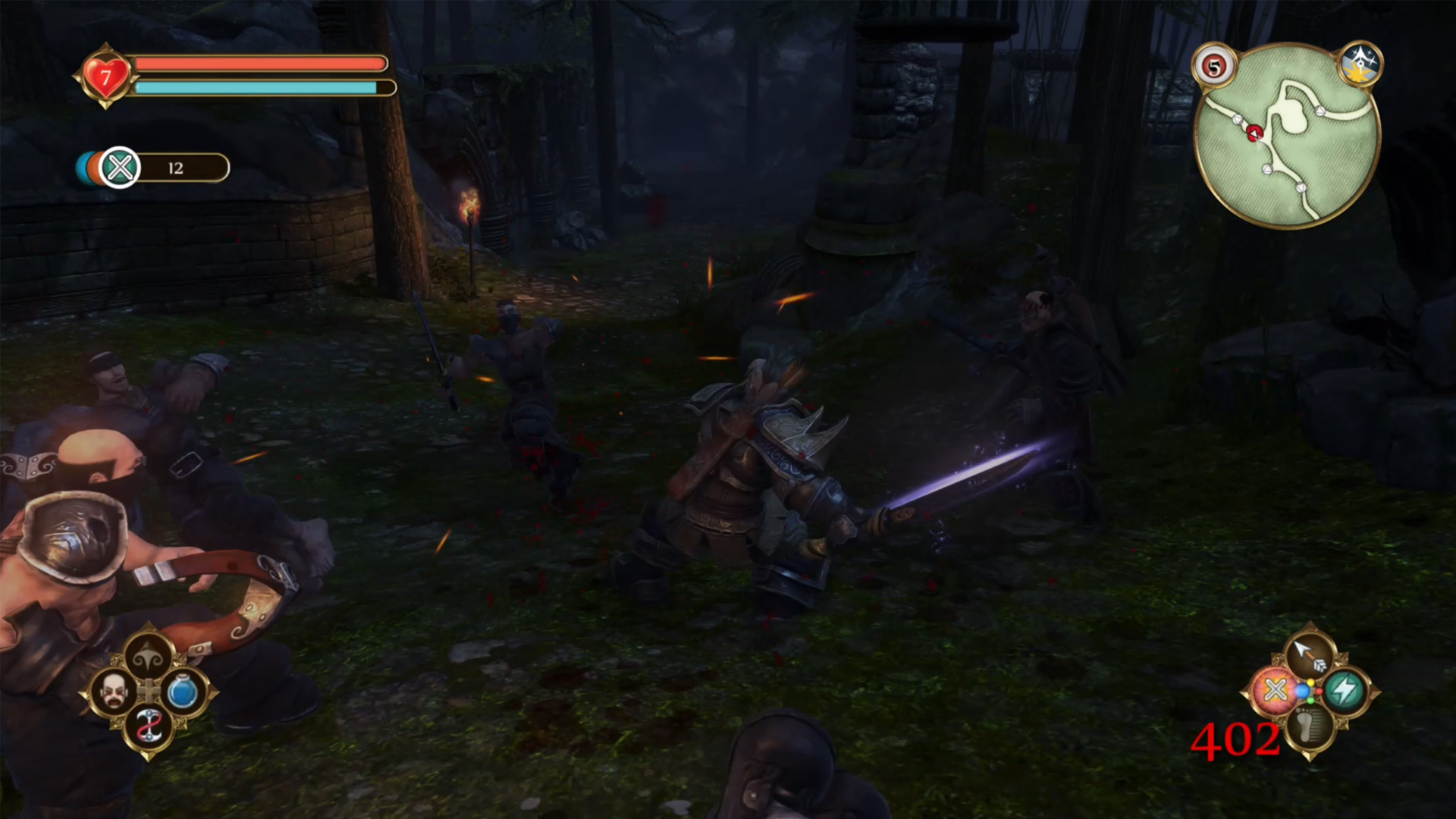
Fun can be had with the combat, but it isn’t going to win any awards. The multitude of play styles on offer is noteworthy despite not feeling nearly balanced enough for all three to be equal to one another. Melee is easily the most feasible with a basic combo and some power attacks. Magic, on the other hand, feels too flimsy despite some real game-changing spells like Multi Strike. Ranged combat is great if you have a high enough damage output to one-shot an enemy from afar without alerting his friends, but it becomes entirely useless the moment they begin to group around you because kiting can be incredibly difficult to manage due to enemy combat animations and the game’s camera. The most unforgivable aspect of Fable’s combat, though, is its frequent stunlocking, exemplified in fights with the Rock Trolls. If you're unlucky enough to be hit by one of their boulders, you'll find yourself locked into an animation of falling down and getting up with no invincibility frames. During this animation, the Rock Trolls can and will continue to hurl the boulders your way, meaning you'll likely run into situations where they never-endingly chuck rocks at your helpless body until you’re maybe nudged just out of sight or you simply get lucky enough to roll out of the way before being hit again.
Albion’s NPCs exist with some very basic goals, roles, and schedules. Expressions can be used to provoke responses from them and help shape the way they treat you. Being generally rude or aggressive could result in higher prices at shops, but going far enough to be feared may earn you a discount. This idea is undeniably novel but the system itself has a tendency to be frustrating because choosing your expression is confusing and often fails to work unless you're within kissing range or locked onto the NPC which should never come to mind because you're taught in the tutorial that locking on is a hostile action. These problems wouldn’t be as egregious had expressions been relegated solely to optional content, but it’s one of the game’s fundamental features with a decent impact on general gameplay and even a number of quests relying on the system’s affordance to manage followers, ordering them to either follow you or sit tight so that you can take care of baddies ahead with them out of harm’s way.
Clunky as the social aspect may be presented, the nuance here is admirable. Every character can be interacted with in whatever way you desire, including marriage. Doing so doesn’t net much for the player aside from adding another notch in your Hero’s “fable”, so-to-speak, but the freedom of expression is valuable all the same. More tangibly lucrative are the game’s economy-based systems that allow the player to sell bits and bobs for profit as well as purchase homes to move into or rent out. Bartering removes items from a shop’s inventory which results in their inflating the prices for the remaining supply. Different stores might buy and sell at varying prices as well, so an apple might be worth 10 gold in one place but worth double at another which can be exploited to earn a profit. Delving into any of these features on top of the gold earned through quests will see you wealthy in a short span of time to the point that you’ll likely never not have the funds for whatever gear you may be eyeing at a particular vendor.
I think the most important aspect of Fable’s design is its subversion of common RPG tropes and ideas. Enemies drop orbs of experience to be manually collected by holding the right trigger. The type of orbs dropped depends on the attacks used to fell the foe, with melee attacks resulting in Strength experience, ranged attacks for Skill, and magic for Will. The fourth type is General experience which can also be earned as quest rewards and are used to supplement the individual pools when spending accumulated experience to level up the traits of your Hero. So if you want to level up your character's Accuracy which costs 2000 experience and you've only got 1500 Skill experience, 500 General experience will be spent to reach the required 2000. It's a really cool take on a traditional progression system that rewards the use of a playstyle by making it theoretically self-sustaining and by thematically mirroring the way you actually become better at something-- doing it. If you want to master the art of Will then you shouldn’t be hammering away at bandits and instead zap them like Emperor Palpatine.
Leveling up in any pool influences the way your character looks, so filling up the Strength stat will result in a hulking mass of a man while pouring lots of experience into Will results in magical designs covering every inch of your body. The most interesting aspect of the game’s progression, though, is that every point spent ages the character forward. I was an old man by the end of my game, visually representing the experience gained through my trials and tribulations. Despite the way this conflicts with certain story elements, such as being the younger brother to Theresa who couldn't have been older than 25 by endgame contrasted against my easily 70 year-old appearance, this detail has my absolute respect for thinking so outside the box.
To keep things fresh, modifiers can be applied to quests in the form of Boasts. These cost some gold up-front, but the successful completion of the quest within the confines of said Boasts will result in more gold than you would have normally received, on top of the normal quest rewards. Fable isn’t a terribly difficult game by any stretch of the imagination, so Boasting is a cute way to incentivize the player to challenge themselves beyond the base requirements of a mission. A mindless escort quest is made all the more fun and engaging when I’ve told my fans that I can do it naked and without my clients taking so much as a scratch. It’s also a godsend that failing any Boast doesn’t result in a hard fail-state either, instead only docking the gambled amount of gold required to take on the Boast in the first place and otherwise allowing the mission to proceed normally.
Fable was originally released in 2004, a full three years after Jak & Daxter which achieved a fully seamless world with no loading screens on stricter hardware limitations. The relative bleeding-edge nature of this feat makes the lack of such a feature in Fable understandable, but the extra development time given to The Lost Chapters and the Anniversary edition’s more modern engine on next-generation hardware could have absolutely done away with loading screens if they really tried. Despite a lack of complex geometry or interactivity, the game’s tiny hub areas are knitted together by a web of loading screens. A good number of them are quite empty which begs the question of why they're so small to begin with as surely one or two could be lumped together or at least have more content packed in if they were to remain separate. Looking at this aspect of the game from a 2020 lens makes me yearn for a proper remake of the entire Fable trilogy with a more powerful and flexible engine that would allow seamless navigation of their worlds, among many other benefits.
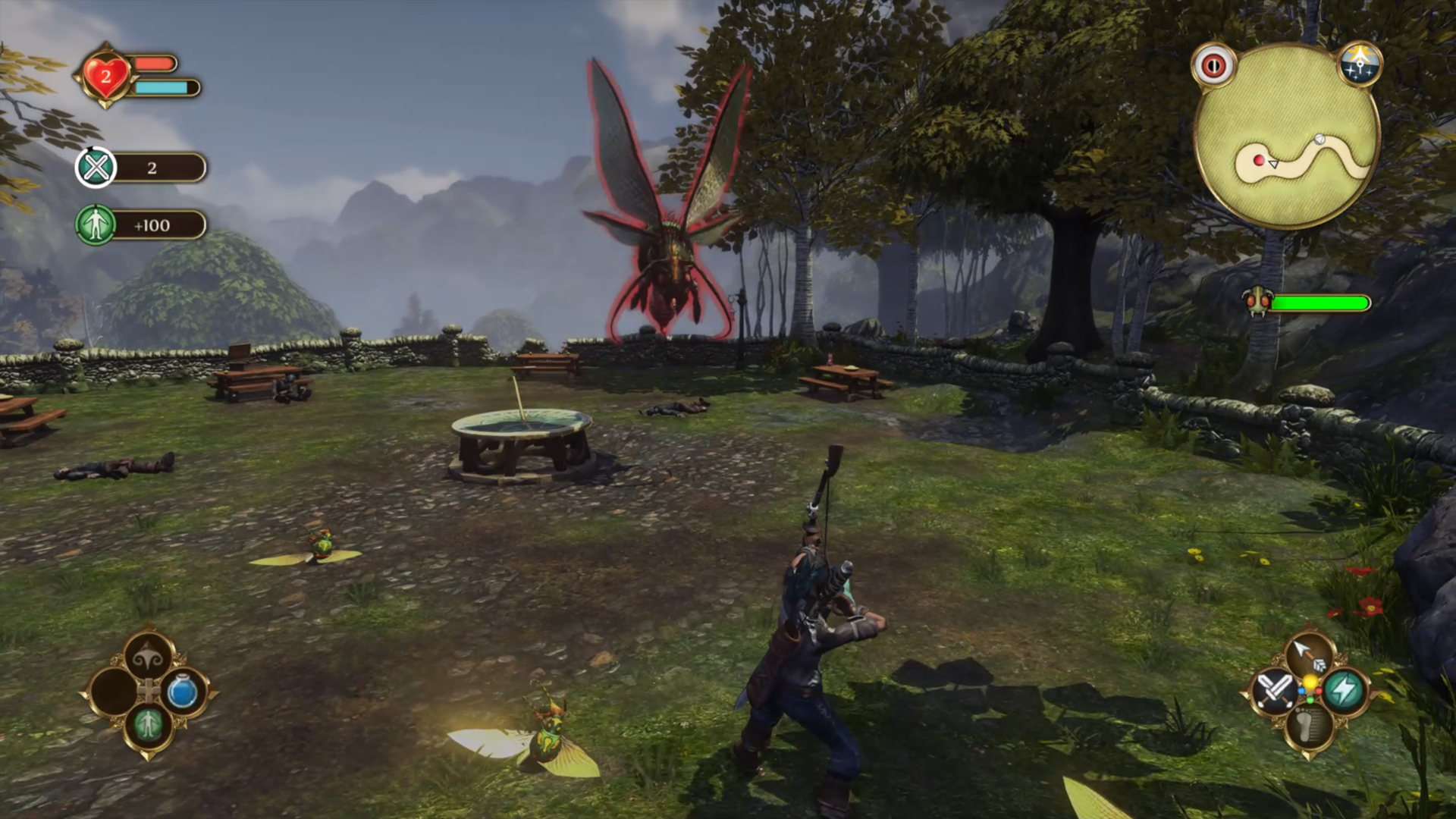
I've always loved the box art and therefore feel lied to by it. The in-game art style is rather generic and the Anniversary edition’s overhaul to the graphics actually harms its appeal to me by sharpening textures and models, adding clarity to visual imperfections that are often masked by lower-fidelity graphics.
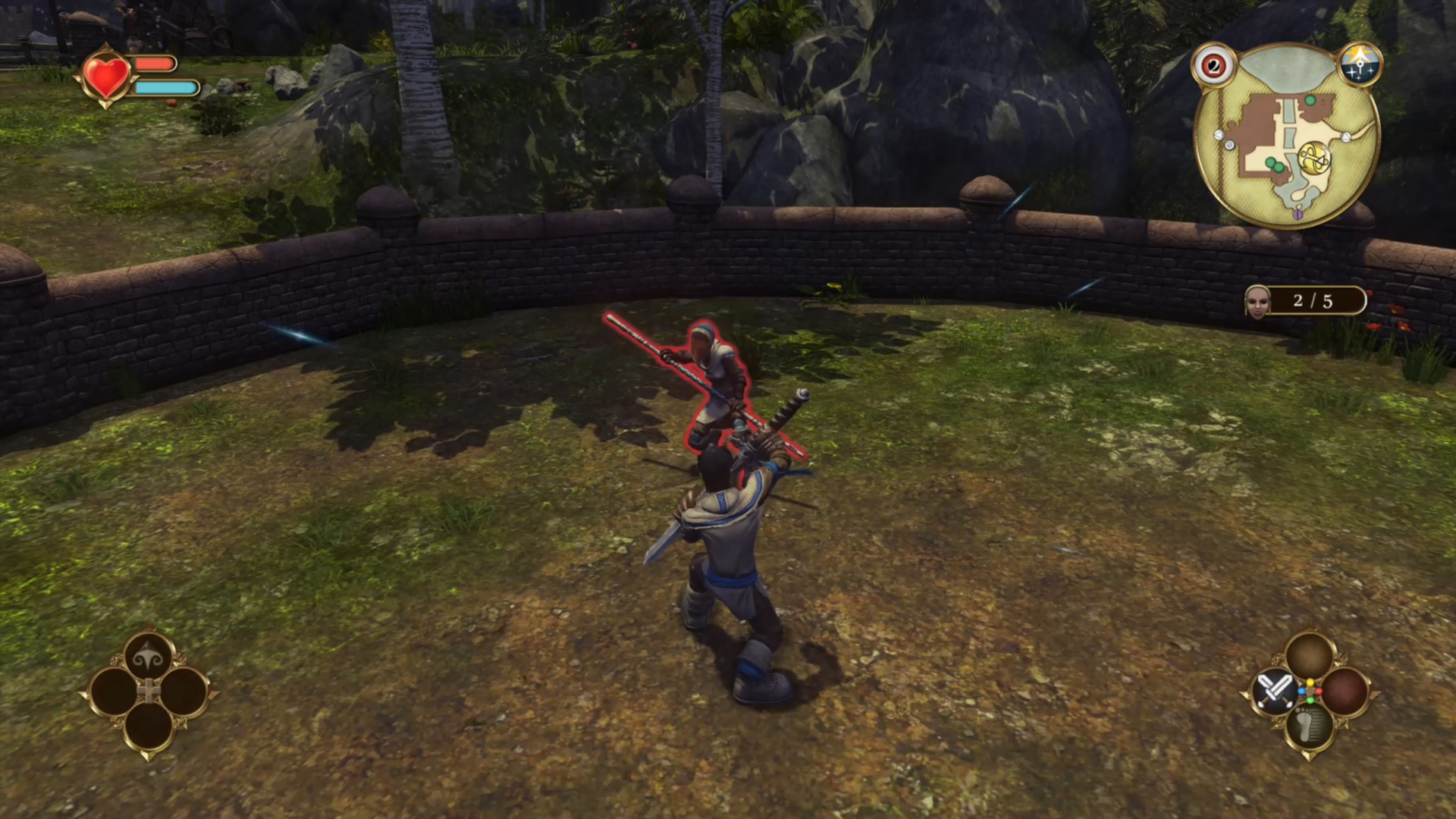
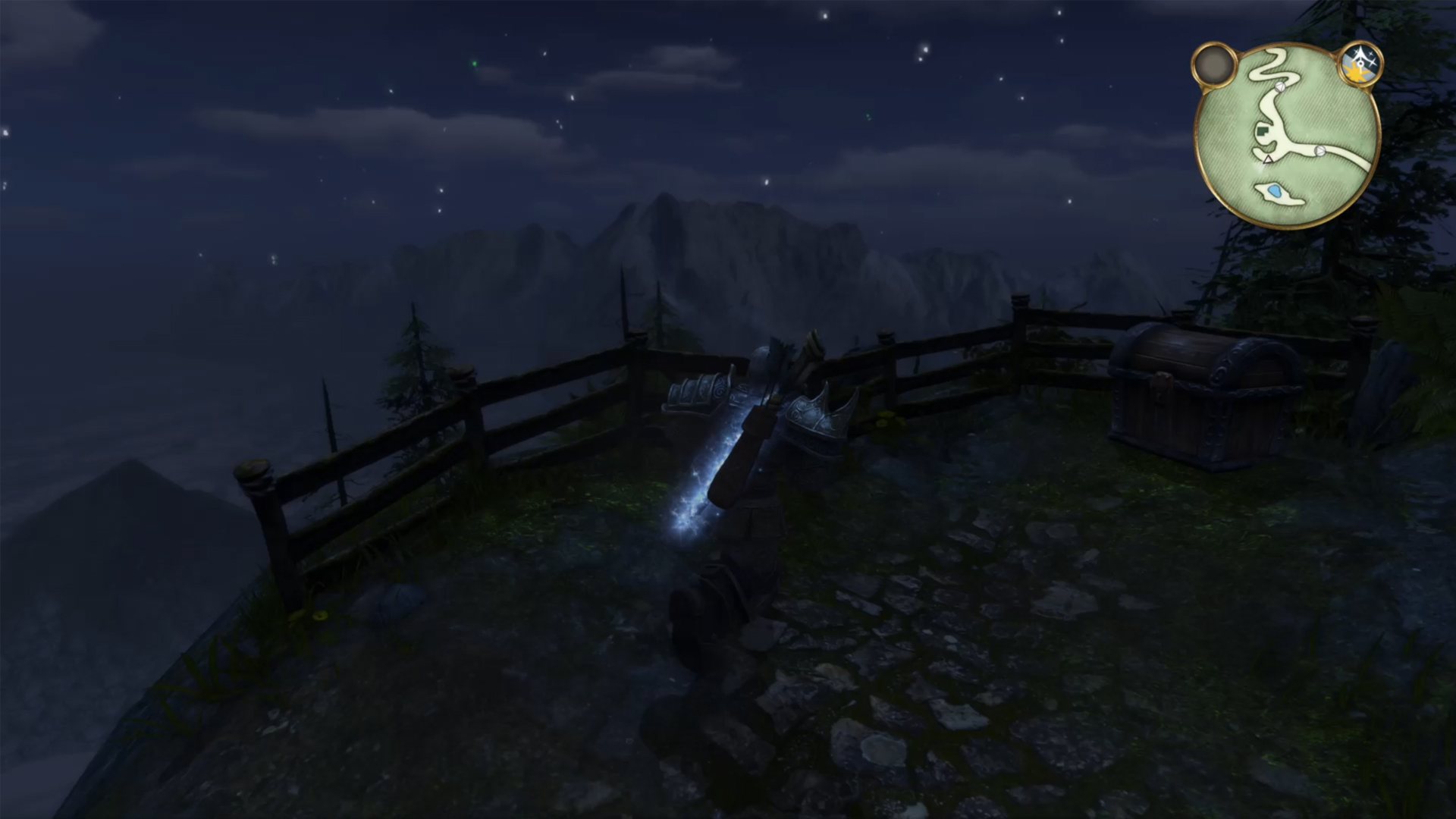
Character proportions are odd and environments look bland. None of the armor, weapons, or spells have a distinct flavor, and animations are goofy and stiff. This all adds up to an old-school quirkiness that can definitely find a home in peoples’ hearts but clashes with the serious tone that the game’s narrative attempts to deliver.
Whimsical and adventurous, Fable’s musical score animates the game more competently than its visuals. I wouldn’t say it moves mountains and in fact I found it to be rather repetitive, takes no risks, and fails to define a unique identity, but it’s a pleasant-enough soundtrack that matches the rest of the title’s generically fantasy flair.
The game’s sound design is fairly amateur with lots of stock effects that charm you at best and take you out of the experience at worst. There’s nothing offensive here, it just fails to do anything more than adding some physicality. Audio mixing is very unbalanced with various dialogues often difficult to hear over the music and effects even after tweaking output levels.
Voice acting ranges from bad to okay, nothing stellar here and definitely a product of its time. Jack of Blades poses the sharpest performance and I actually did enjoy his delivery in spite of the controversial deepening of his voice in The Lost Chapters. As I lack any sort of nostalgia for the original release, this change didn’t bother me in the slightest. I’ve compared the two versions of his voice and I don’t believe either to be necessarily superior to one another. I suppose that makes it a shame that fans of the original couldn’t toggle between the voices for that reason.
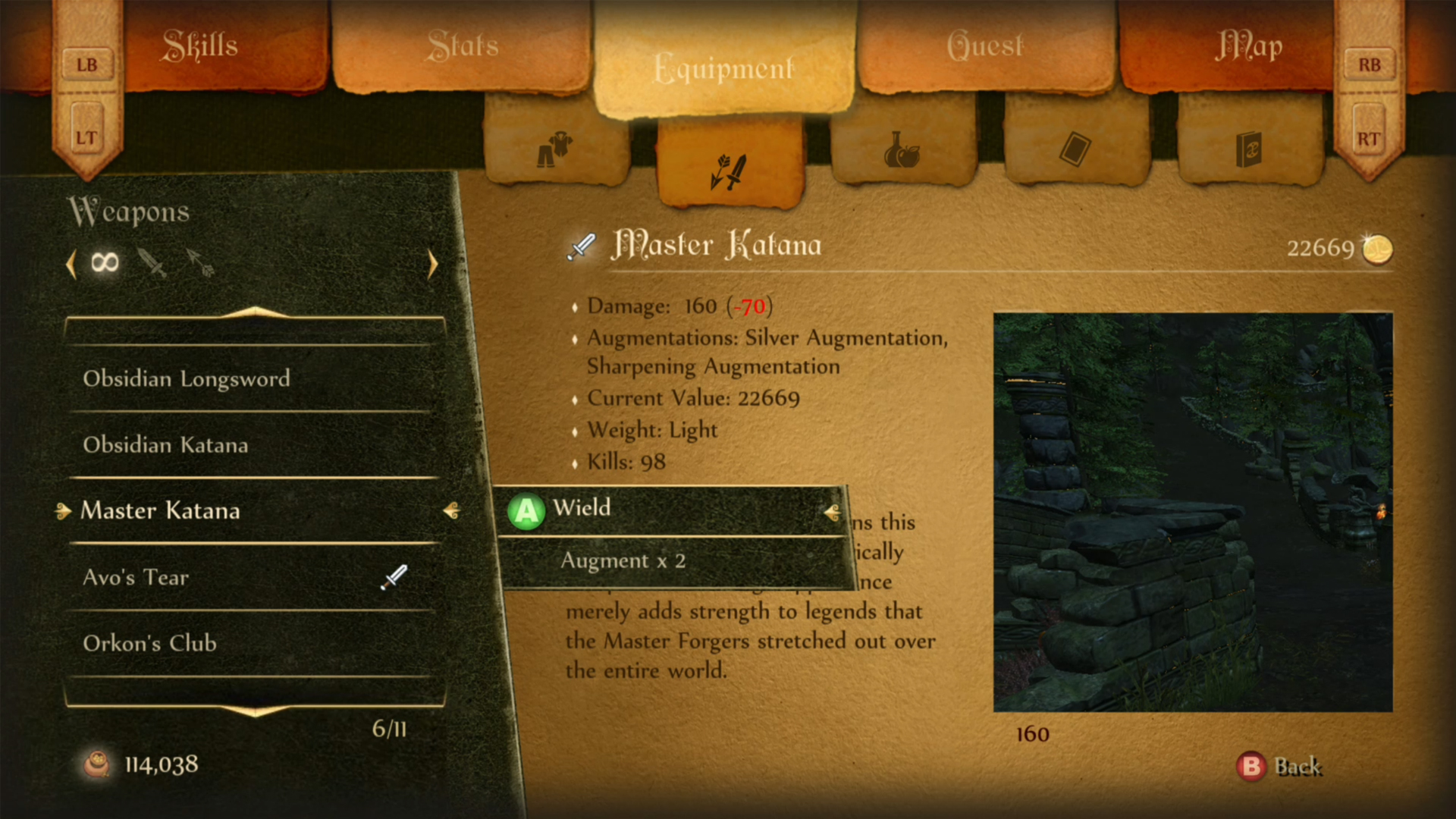
Menus are slow and ugly, though decently organized. I can appreciate that they're designed after pages of a book but would have preferred something more functional. Worse are the bugs that result in issues such as the character preview often not functioning at all, making it impossible to see how a piece of armor looks on the character before committing to it.
As touched on previously, the expressions interface is hugely confusing. The game dynamically hotkeys expressions to the d-pad based on some contextual scenarios, such as facing a friendly NPC vs fighting an enemy, but the act of navigating and choosing one manually is arduous and cumbersome. This too was buggy as my character would continue to use the dynamically hotkeyed expressions while I navigated the expression menu, since both use the d-pad.
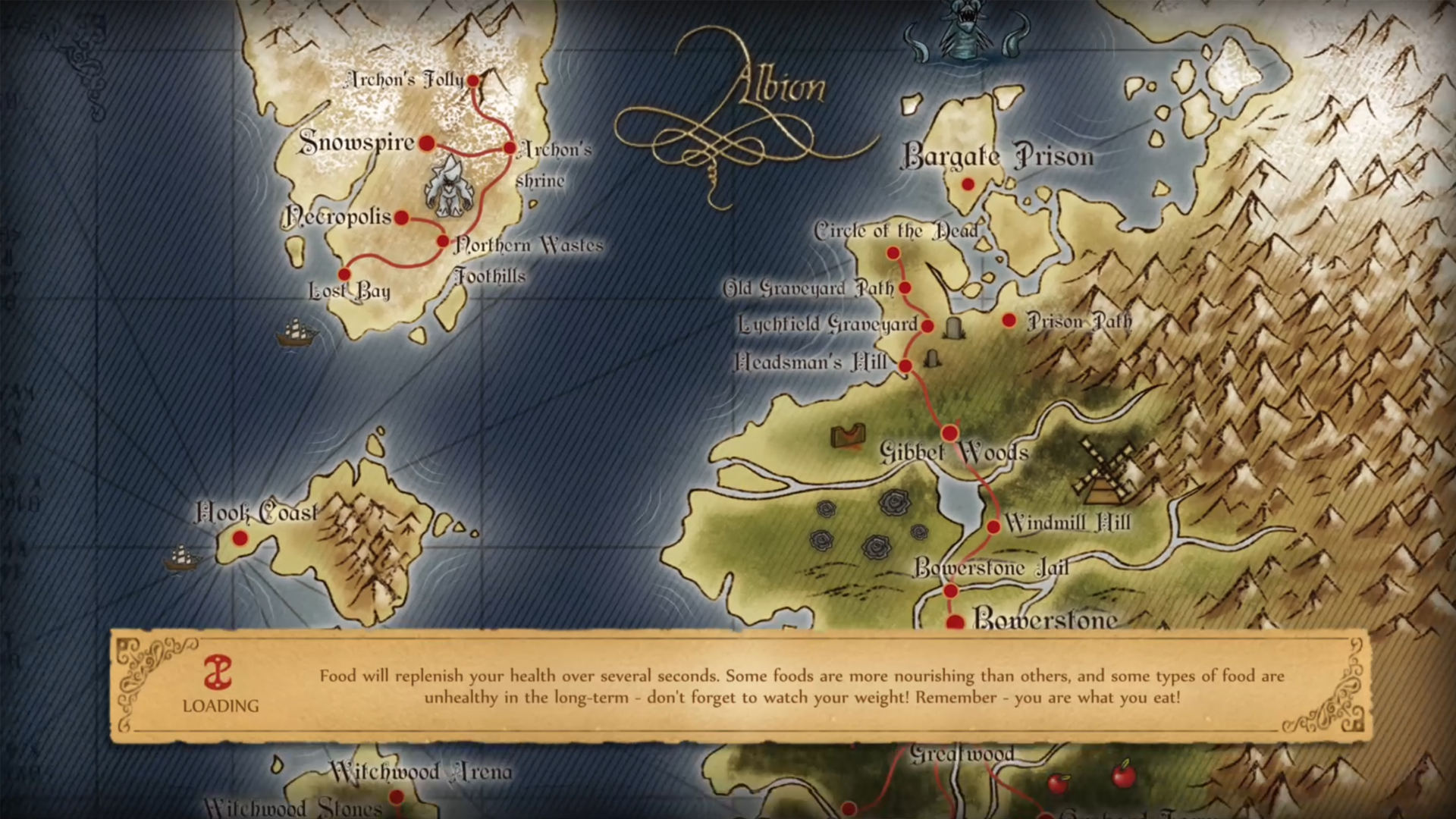
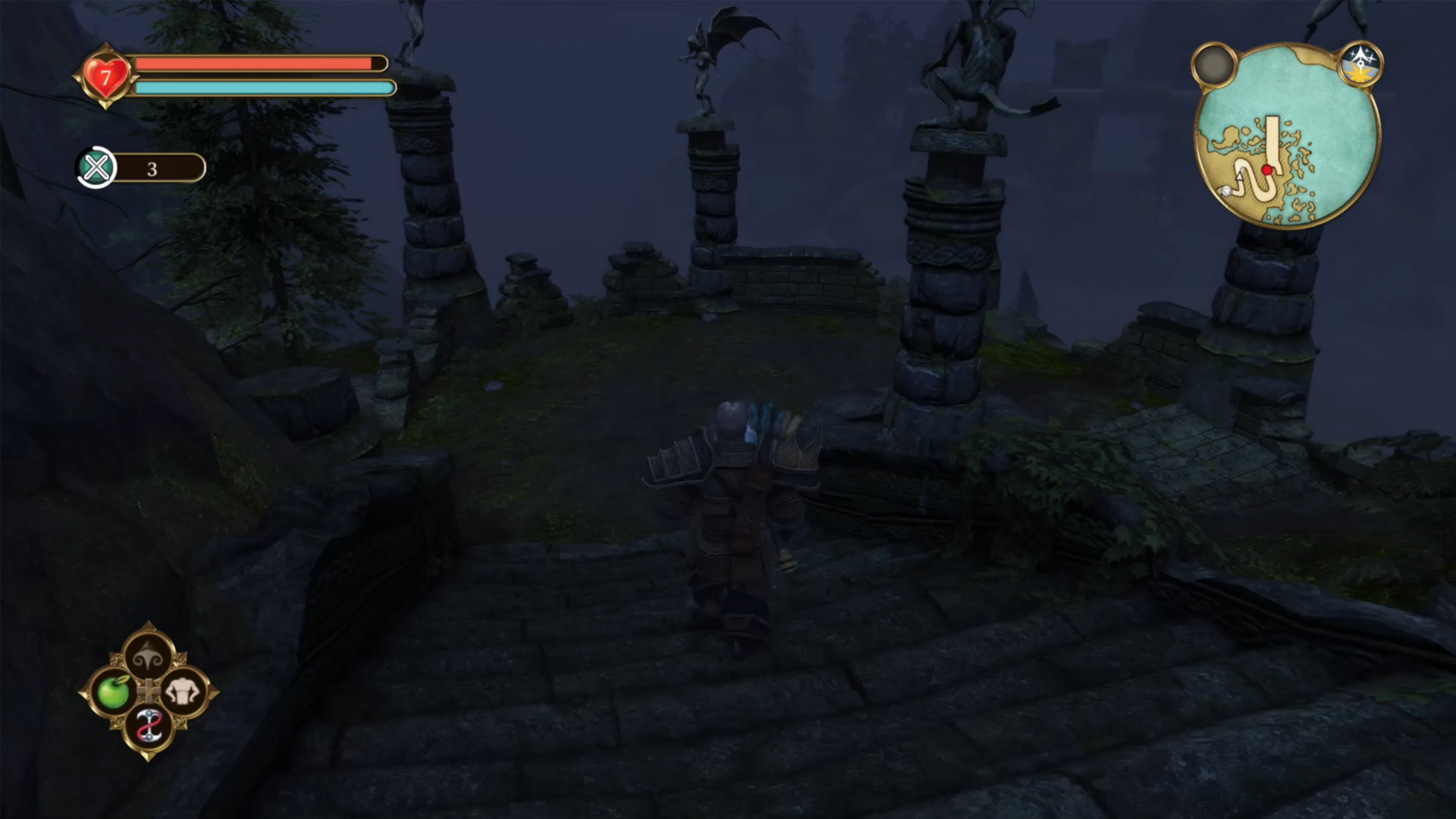
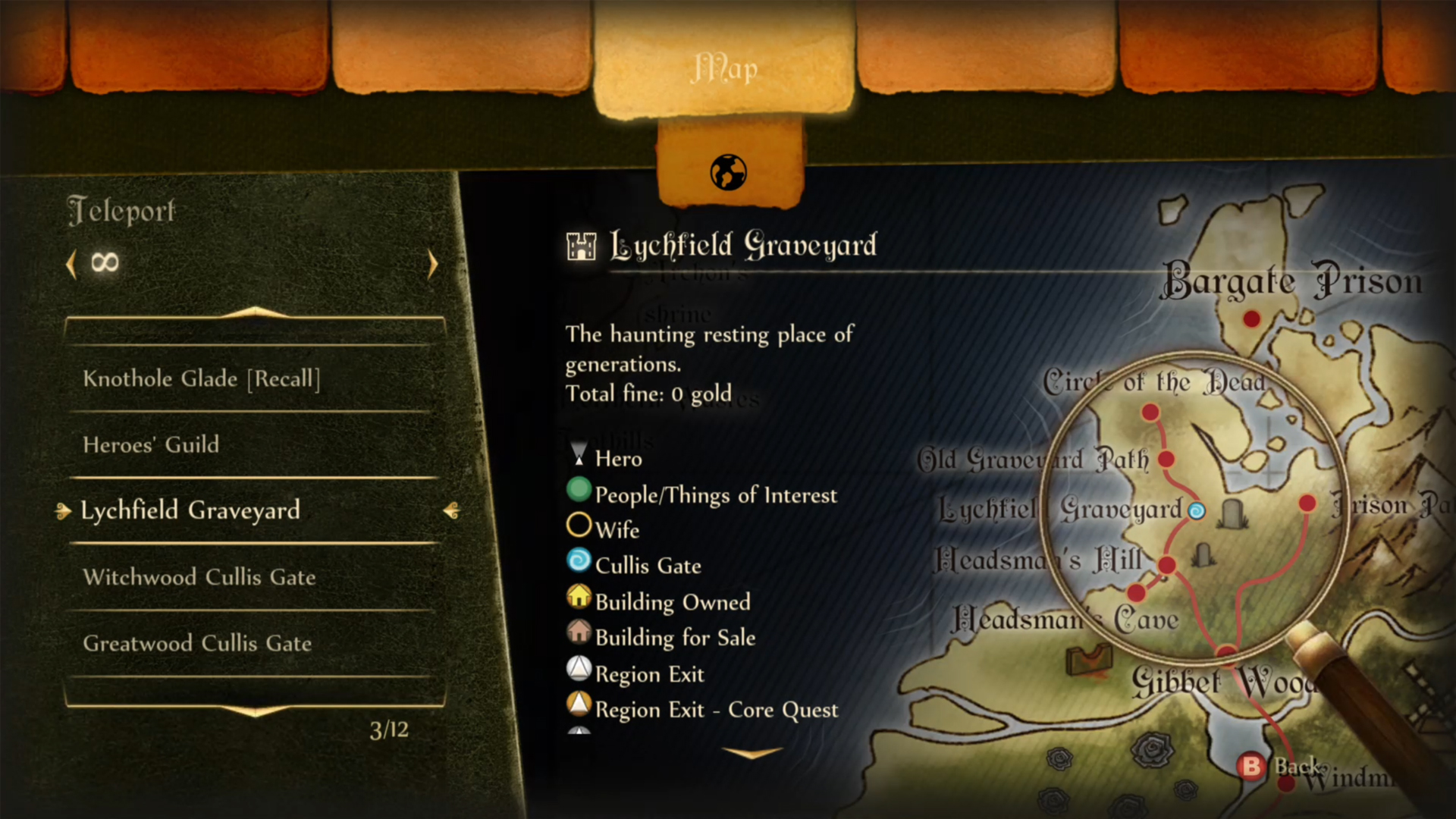
The world map is okay, if unintuitive. Finding any useful information on it is almost impossible so I only ever used it to get a vague idea of where I needed to go for my missions while the rest of its details remained lost to obscurity. I’d consider this a worse sin if Albion wasn’t so blindingly linear, but I definitely don’t appreciate how difficult it is to find shops and the like as a result of the poor map design.
Vanilla Fable ends with the defeat of Jack of Blades, a decent if by-the-numbers finale. Globe-trotting between the primary areas in the hopes to stop the last phase of his scheme is fairly enjoyable and I was genuinely shocked when he slit my mother’s throat just before our battle, despite her fairly unlikeable personality, but the fight itself lacked complexity or challenge. In a last-ditch ego-inflation to con the player into thinking the game offers deep and engaging choices, being forced to choose between the life of Theresa and the most powerful weapon in the game is a fine one-- though my deciding factor is one that anybody can reach that really undermines the weight of the moment: this is the end of the game, the majority of the challenges are all but over, so what benefit is a powerful sword to me at this point? I saved Theresa.
The story continues, however, in The Lost Chapters and Anniversary edition. Jack of Blades survived your previous bout, ready to emerge from Albion’s afterlife while his minions wreak havoc on the land. Had I enjoyed the base game more, I think this could have been a fun and surprising turn of events, but I was just ready for it to end. It’s cool that Jack of Blades speaks through your Guild Seal during this section instead of the Guild Master because it's unsettling that the villain can so directly interact with the player at any time, reminiscent of Voldemort's ability to megaphone his voice across the minds of the entire Hogwarts student body. The missions on offer in this second endgame maintain the same quality and narrative variety, but the gameplay is far more combat-oriented. I found that this segment of the game better rounds-out the main story by tying up a few more loose ends and capping off Jack of Blades in a more satisfying final boss fight that still lacks depth but at least displays higher stakes.
After besting the arena, Jack of Blades mentions that Scarlet Robe, your mother, gave birth to two Heroes: you and Theresa. This totally flew over my head my first time through and now gives me pause for reflection on the latter titles. I appreciate the reframing of Theresa’s character through this plot point, but it certainly raises questions that I feel go wholly unanswered by any game in the series. Perhaps her foresight as a seer defines her as a Hero in a way that differs from the way the Heroes’ Guild trains those that take the title? Maybe there’s more to her and she's holding back, or her blindness impairs her other innate abilities? The loose rules regarding the role of Heroes, the Heroes’ Guild, and the rest of Albion’s lore highlight that the game’s story wasn’t given enough time to bake in the oven, even if they can be appreciated for their mysterious and open-ended nature.
Appreciating what Fable achieved for its time is easy, but I think it’s important to examine its many flaws in order to see how future titles and other games might have learned. I by no means think it’s a bad game, but I can’t think of any reason to return to it after having completed it once and knowing that its successor is superior in every way.
That’s why I think it’s a true testament to the game’s charm and approachability that I decided to play through it once more anyway. Fable is a lot like Ocarina of Time in that way, where the final product is greater than the sum of its parts and resonates so easily with an innocent part of the brain that few games pay attention to anymore.